Tuesday, April 2, 2024

Day by Day Throughout the Year - 1st quarter

It’s now been about 70 years since I used my father’s Kodak camera, which took size 616 roll film, to take a few photographs. The negatives were about the size of postcards as were the black and white prints of the landscapes through which we hiked.

When I was in college I bought a rangefinder-style camera that took 35mm film, I still have some of those slides – photos of family and scenery.

In the early 1970s it was a single lens reflex camera and several lenses that went with me day by day, it produced 35mm slides of our kids as they grew up and the wildflowers and wildlife that had always interested me. I’m still photographing those things, but added our grandchildren to the list of subjects.

For the last 50 years I've seldom been in forest and field without a camera – a camera that has made me more aware of the wonders of the world in which we dwell.

Five times over the last decade I’ve made it a project to post an interesting photograph day by day throughout the year. Some days it's been of something large enough that it couldn't be missed, other days it's something small that's frequently overlooked.

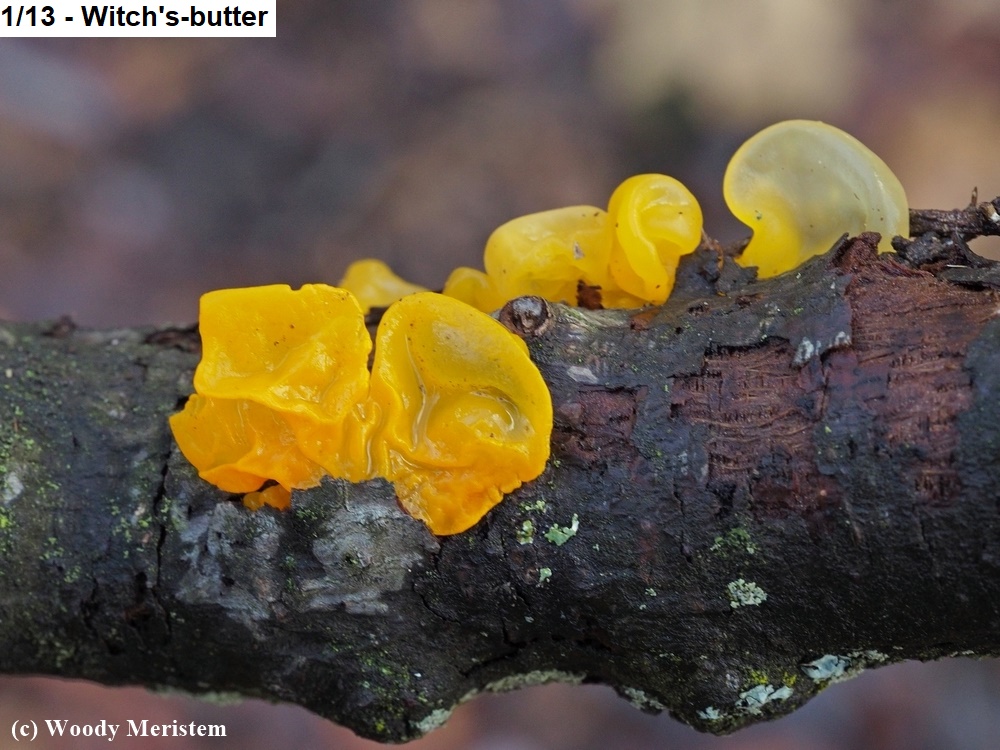
These are photographs taken day by day throughout the the first quarter of 2024, photographs of the natural world where I’ve spent a lot of my life both at work and at play. These images are from wherever I might have been and of whatever may have caught my attention –


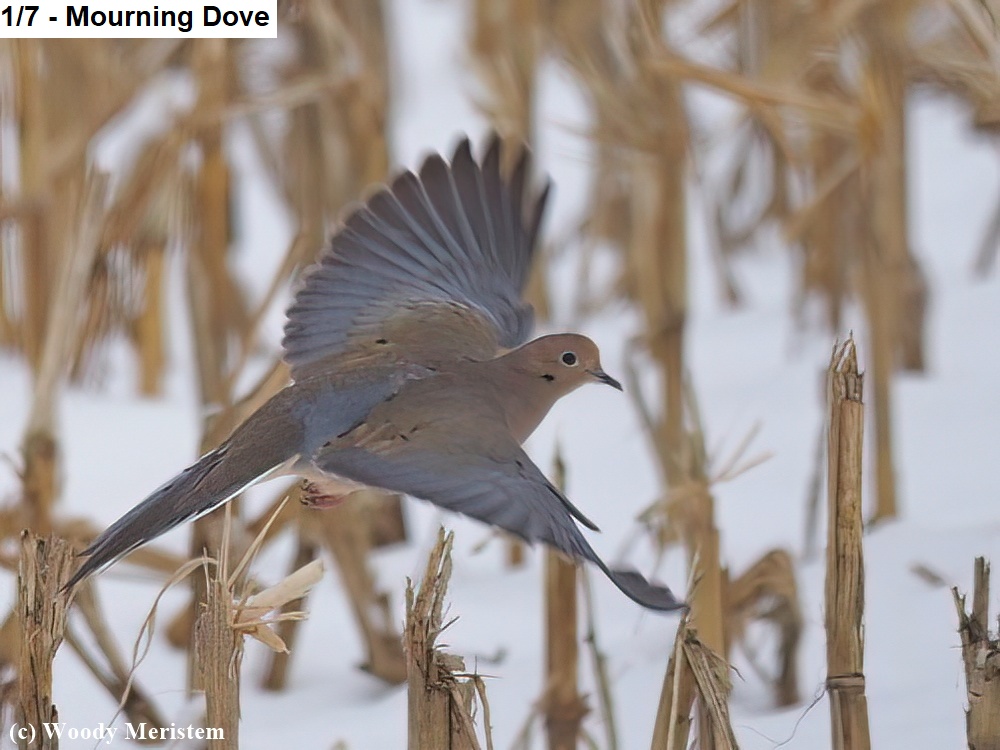


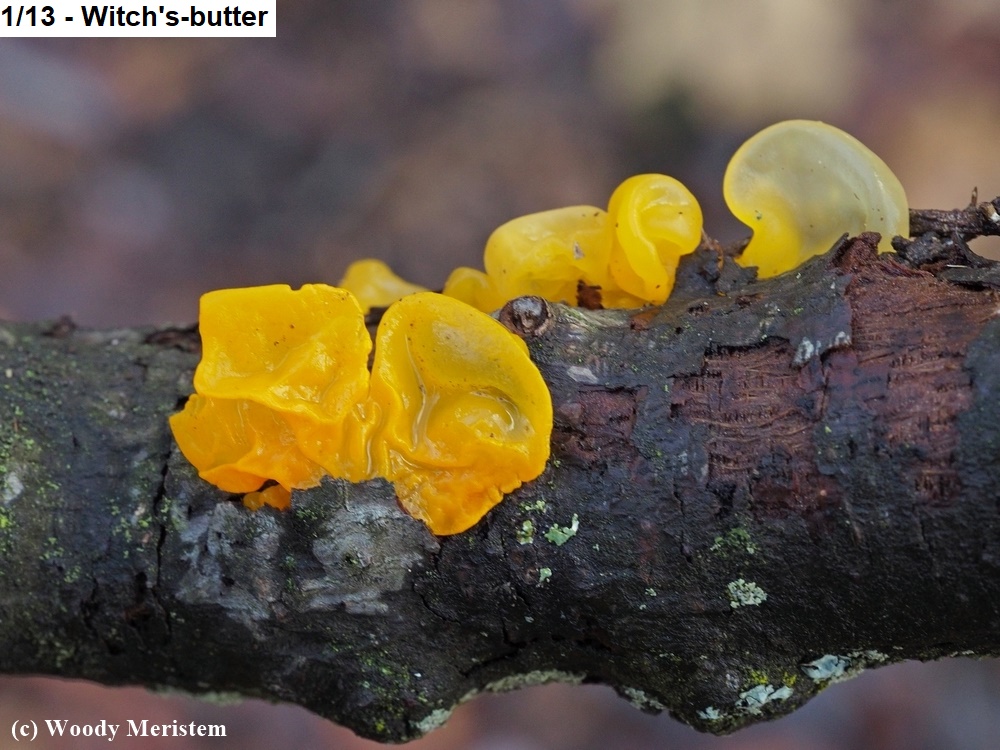


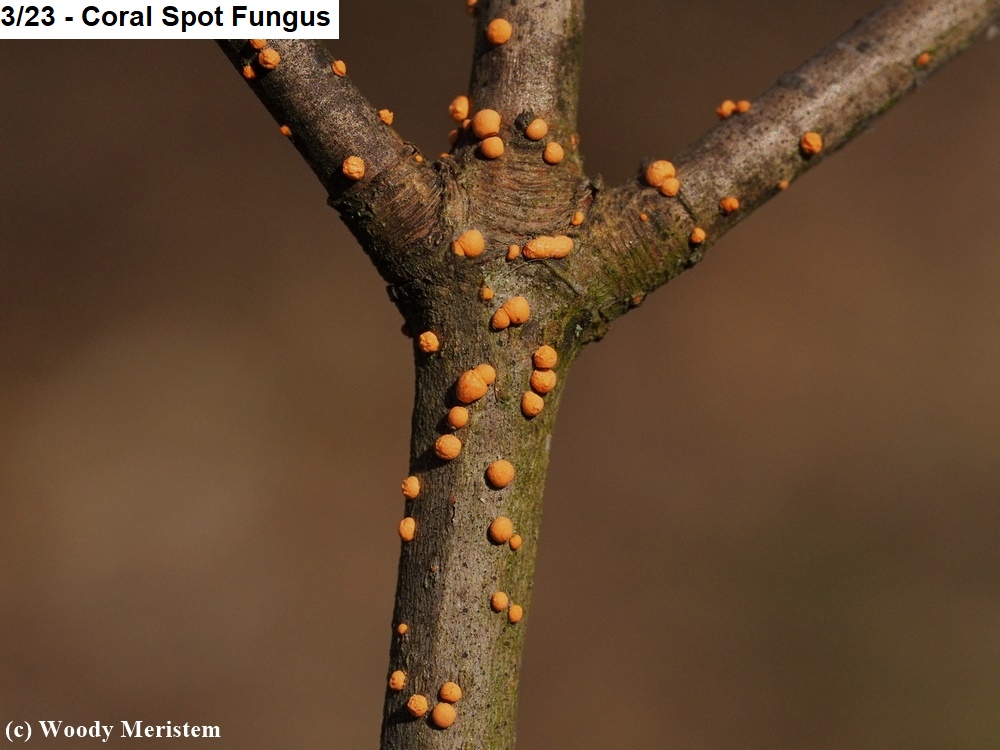


Those are the day by day photos from the first three months of 2024. Photos of the second three calendar months will follow as spring flowers bloom, insects become more active and spring fades into summer.

Projects like this are well worth doing because they encourage me to take a closer look at the world around us. Consider doing something similar with anything that interests you. You don't need an expensive camera, a cell phone or an inexpensive used camera could yield interesting and inspiring images.

Wednesday, March 27, 2024

Fight! Fight!

It was a beautiful morning, blue sky, no wind, warm for March and with Spring in the air. The surface of the pond was like a sheet of glass, the only ripples caused by the slowly swimming waterfowl. Those waterfowl were five or six pairs of Canada geese distributed around the edges and two pairs of ring-necked ducks. On the far shore a great blue heron slowly stalked along searching for small fish.


The geese had complained long and loud as I settled into my folding chair and arranged a sniper’s veil as a flimsy temporary blind. After a while they quieted down and resumed doing goose things. Not much happened for quite some time, but any morning like this is a good morning. After a while the sun moved far enough in its arc across the sky that I was looking almost directly into its brightness – not good for photography – and it was just about time to leave.

But wait, there was honking in the air as pair of Canada geese flew in and settled on the water. With that another great clamor arose among the geese. I don’t understand goose, but there must have been some harsh honks exchanged.

The recently arrived gander repeatedly took a beakful of water and shook his head side to side releasing a spray of water. Apparently the male of the nearest pair accepted the challenge and came on with a rush –


The melee lasted less than 15 seconds before the interloper retreated a few feet and peace was restored to the pond.

Wednesday, March 20, 2024

The Best Laid Plans

In the road in front of the house lay a dead gray squirrel, one of the innumerable wild creatures killed by vehicles each year. 


Its death presented an opportunity for some camera trap videos. So I took the recently demised up the hill above the house and lay it down in front of one of my camera traps.

I’d done the same with a dead screech owl a few years ago with the resultant still images presented in this post.

As with the screech owl, I used a large steel spike to pin the carcass to the ground. Hopefully the spike would prevent some animal or bird from quickly making off with the remains.

Here are the videos –


The gray fox was quite tentative as it approached the squirrel: perhaps because of the camera trap’s infra-red light, perhaps because that’s how gray fox approach prey that’s rather large and might fight back, perhaps because that's how gray fox approach carrion.

Mated gray fox pairs often hunt together which may account for a fox appearing in clips after the squirrel had been carried off, or perhaps it’s the original fox come back for anything it missed.

The opossum missed a meal, beaten to it by the gray fox. Maybe next time the opossum will get what it was looking for.

The same goes for my plan to get multiple species feeding on the dead squirrel – maybe next time.

Wednesday, March 13, 2024

Free Eats

The post from two weeks ago, Dinner is Served, featured the videos from a camera trap’s the first week at the carcass of a white-tailed deer that had apparently been killed by a bolt from a crossbow.


When I checked most recently the carcass had been moved and a lot of rain had fallen. The wetland vegetation was flattened where the carcass had been dragged off – Oh Boy thought I, there would be videos of a bear or eastern coyote (other than humans or large dogs the only creatures in the area capable of dragging the carcass away) feeding on or dragging the dead deer. I followed the drag mark and found what was left of the carcass in the water. Not much remained, the large bones, rib cage and most of the head.

Checking the camera I found a multitude of videos of the red fox; actually two red fox, one readily distinguished by a mange-caused bare spot at the base of its tail. And a few really poor videos of an opossum and two raccoons feeding on the far side of the carcass. But there was no video of the carcass being removed. It seems the camera malfunctioned at the most critical time – Murphy's Law at work. Nonetheless there were some interesting videos –


The ravens are probably a mated pair that nest on a nearby high ridge and regularly visit the valley. Ravens are omnivores, eating virtually anything edible. They eat waste grain and earthworms, are predators on small mammals and birds and regularly scavenge other predators’ kills. I’ve watched them flying along highways searching for roadkilled animals and they often follow large predators or hunters to share in the booty.

Bald eagles, although they primarily feed on fish, are active predators of small and medium-sized mammals and medium-sized birds and also readily scavenge from carcasses.

As for the great horned owl, it apparently didn’t feed on the carcass but might have considered an opossum a suitable meal.

While I was very happy to get videos of the ravens, owl and eagle, in some ways the most interesting and indeed the most humorous were several videos of the man and his pets – especially the goat. Have you ever seen anyone walking with a goat as they would a dog?

Wednesday, March 6, 2024

Beneath the Leaves

This has been an extremely warm winter – the lowest temperature in January was 9° F – with very little snow, and what snow we got didn’t last long before melting. One day in early February, when there was no snow to be seen at the house and it was 50°F, I repeated an exercise I’d done several years ago (see it here). Out to the woodland behind the house I went and gathered a handful of fallen and decaying leaves. Into a white plastic basin they went and back into the house I went with basin in hand.

There, with plenty of light, I used two precision tweezers and a hand lens to sort through the leaves and seeds and earthworm casts to search out the small creatures that live among, and feast on, the forest’s debris and on other small creatures beneath the leaves.

Since the temperature had been a bit below freezing a few days earlier and the ground was without an insulating covering of snow I was surprised by some of the things I found.

There were four Soil Centipedes, speedy predators of even smaller creatures that live in the forest floor. They were of different sizes and shades of tan –


Two of these small beetles were among the leaves. I couldn’t identify them but assume they feed on decaying leaves or fungus –


Also among the unidentified was this small and very attractive spider –


Speaking of spiders, there were some that I could identify: a small Wolf Spider, a Dwarf Spider (yes, that’s its name) and a Bark Crab Spider –


There were only two springtails to be found, both of the same species – Elongate-bodied Springtail. Springtails somewhat resemble insects and were considered to be insects when I was in college oh so many years ago, but now they are in a separate class. They derive their name from a process under their abdomen that gives them the ability to flip through the air to escape predators –


There was an earthworm among the leaves, almost certainly a European species since native earthworms were eliminated from glaciated areas. The European worms were introduced by settlers who brought potted fruit trees and garden plants to the New World –


The Garden Slug is another introduced species that I found among the leaves. Since they’re entirely soft-bodied it was really surprising that this one survived January’s colder days –


Another surprising survivor was this moth larva (caterpillar), perhaps the larva of an owlet moth –


One of the last critters I found in the handful of leaves was this well camouflaged Rough Stink Bug –


Gathering and sorting through a handful of decaying leaves is an enjoyable activity, allowing us to see things we don't see in the usual course of our lives. It also makes me
curious about how many small animals are crushed with every footstep we take in the forest – curious but not guilty.

Wednesday, February 28, 2024

Dinner is Served

Down at the edge of the wetland lay the carcass of a white-tail buck, nearby was a crossbow bolt (arrow), a good clue to the cause of its demise. The deer was probably wounded during the late archery hunting season which ended in January. Wounded deer, especially those hit in the abdomen, frequently head for water. The hunter never found the deer so there it lay.

Poachers frequently use crossbows since they’re silent and quite accurate, so the deer could have been wounded by a poacher working after dark. In that case there was almost certainly no effort made to find the deer.

When I found the carcass it had already been fed upon by scavengers – eastern coyote, bald eagle, vultures or …?


Another great opportunity to get videos of whatever was feeding on the carcass. As usual in an area without trees I mounted the camera on what is called a concrete stake, a half inch diameter steel rod three feet long with a series of holes along its length. These are usually used to hold concrete forms in place, but they’re also excellent for holding a camera trap.

With the camera trap in place there was nothing to do but wait for a week or so and then check the videos it obtained. The first week the camera had well over a hundred videos of vegetation blowing in the wind – but it also had many videos taken over several nights of a red fox feeding on the carcass –


Most predators will feed on the carcass of a dead animal or bird. Less energy is expended in feeding on something that's already dead and there’s much less risk of injury for the predator – an injured predator is at a distinct disadvantage in catching prey.

Over the years In Forest and Field has had a number of posts showing the creatures that have fed on the carcasses of a black bear, white-tailed deer, raccoon and screech owl.

The plan is for the camera trap to remain in place until the deer has been reduced to scattered bones and hair – bones that will be gnawed upon by rodents, hair that will grace nests of birds and rodents.

Wednesday, February 21, 2024

Last Year at a Fallen Aspen

If you’re a regular visitor to In Forest and Field you’ve seen previous videos of the wildlife activity on and around fallen trees. Today we’re looking at the wildlife that used a large fallen quaking aspen in 2023.

Quaking aspen has the widest range of any North American tree and is named for the way its leaves shake in the slightest breeze due to their flattened petioles (stems). Aspens are fairly short-lived trees with an average life-span of about 75 years although some individual trees can live twice as long. These trees are pioneers on disturbed sites: abandoned fields, strip mines and areas burned by a forest fire. They can be distinguished by their gray bark with a greenish or yellowish cast and almost round leaves. Old aspen have dark furrowed bark.


This fallen aspen grew in a long-ago pasture and was one of the last remaining aspens on the site; it was surrounded by younger maples, ash and birch trees which will take its place in the forest. The tree stood for several years before it decayed enough to fall. In death it’s attracted a host of wildlife species –


The red fox can be easily differentiated from the eastern coyote by its uniformly colored coat and the dark stripes down its front legs. Apparently the black bear was exhausted as it rested before it crossed the fallen aspen. Did you notice the mouse climbing the distant tree and the mouse carrying its prize, a small bone that will provide the mouse with calcium?

Wednesday, February 14, 2024

Eagles on Ice

It was an absolutely beautiful morning – clear as a bell, bright blue sky with nary a cloud, cool bordering on cold. It was also a great day to do something H and I have done often over the many years that we’ve been together: take a long ride through pretty country.

It wasn’t long before H spotted an adult bald eagle perched in a white pine; I never saw the bird and could neither stop nor turn around to take a look. Some time later we visited a property where I’d occasionally worked in recent years, a property with large old trees, abundant wildflowers in spring and beautiful stone walls.

The beauty of the day prompted us to visit a large Corps of Engineers lake to see what we could see. The lake was almost completely covered with ice with just a few areas of open water. In the water was a flock of Canada geese and on the ice was a group of ring-billed gulls.

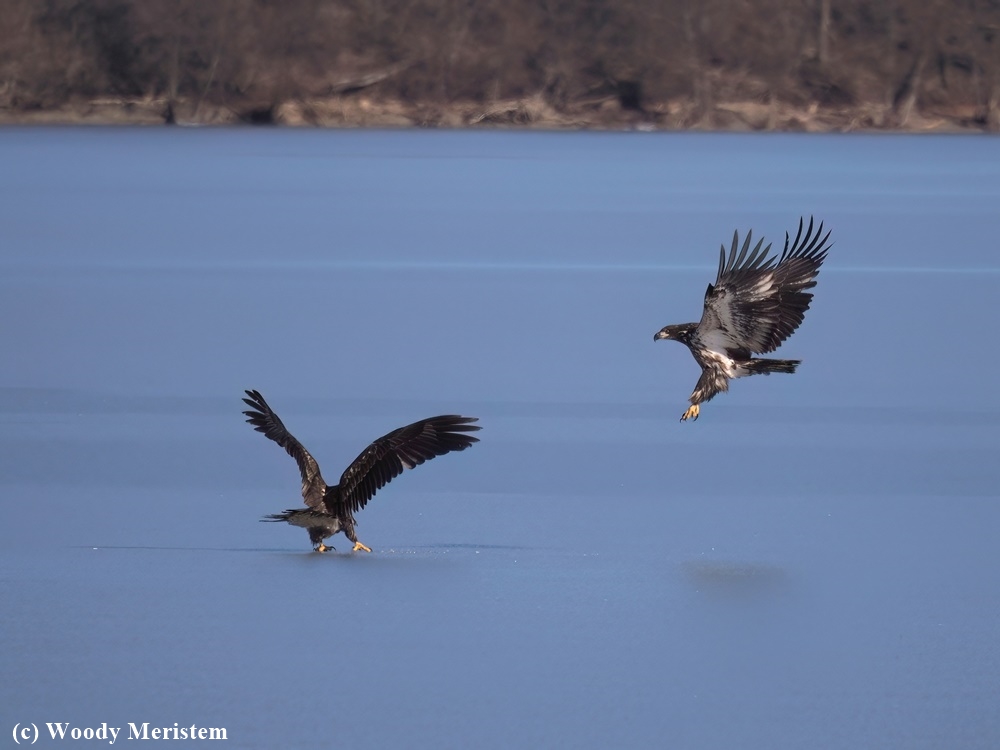
We drove to a spot where we could see more of the lake – out on the ice was a juvenile bald eagle feeding on fish frozen in the ice and being harassed by a band of common crows –


I was busy looking through the camera’s viewfinder and taking photos when H said “Here comes another eagle!”


That was the beginning of a squabble over the fish scraps between the two young eagles –


One prevailed and enjoyed a few pieces of fish –


Until an another bird (a three year old) flew in and took over –


The birds kept looking up and we did likewise to see three more bald eagles coming in –


The after a while the crows left, a bit later the eagles flew further out from shore. One of the eagles that had come late to the party was a four year old bird which the youngsters followed to another frozen fish –


The blue sky reflecting off the ice gave it a blue cast and the heat from the sun caused a heat shimmer that made photography at long distances problematic; the shimmer can be seen in the video.

While the ice easily supported the eagles, it wouldn’t support little ole me and, despite it being a beautiful day and wanting to get closer, I decided a polar plunge was not in the cards so the photos and video were taken from shore and at quite a distance.