Wednesday, April 22, 2020

Fickle April


April 19, 1976, 1:10pm, temperature 93ºF, wind out of the west, an old powerline snaps, the broken end sparks as it nears the ground, the spark ignites the grass and leaves. From there the fire is off and running, rapidly burning eastward, pushed across the Allegheny Plateau by the wind. On the second day I was leading a crew that was backfiring in an attempt to control the fire which grew to over 3,300 acres before it was extinguished by rain early on the fourth day.


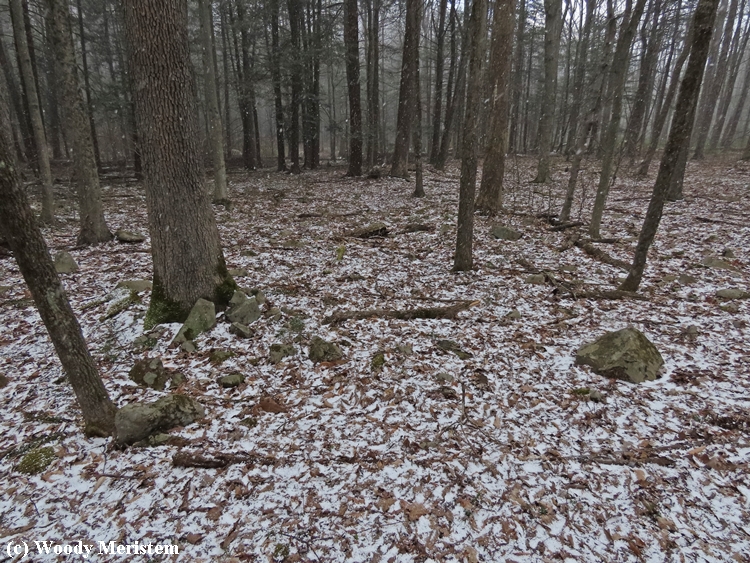
Fast forward to April 16, 2020, temperature 34º, gusty wind swirling beneath sleet squalls, some squalls with sleet falling so heavily it wasn’t possible to see across the valley, some sleet the size of BBs, the wind propelled the sleet to sting the face, sleet falling heavily enough that the ground in the Big Woods was covered with white in ten minutes.


Snow fell the next day, putting two inches of the white stuff on the ground – it melted later the same day as the temperature rose. April is the fickle month as flowers bloom, leaves emerge – and snow falls.

Thursday, April 16, 2020

The Stories They Could Tell


Throughout northcentral Pennsylvania the predominant size of the farms in the 1800s and early 1900s was between 50 and 100 acres, many were even smaller. Quite a few of those farms were on soils that were marginally suitable for agricultural crops, soils that were shallow or very acidic or on steep slopes.

Often it didn’t take more than a generation or two for those soils to be exhausted, having lost the nutrients and organic matter that had taken centuries to accumulate. That, in combination with several agricultural depressions and better paying jobs in towns and cities, resulted in a large number of farms being abandoned by the 1960s.

In other cases, especially on better soils, the economics of modern agriculture resulted in farms being consolidated and many of the buildings became superfluous to operation of the now-larger farm. The loss of old barns was the subject of this post.

It’s not just barns that have been abandoned and left to decay and collapse, it’s also some of the old farmhouses. Here are a few abandoned houses that can be found along the roads I’ve traveled –


Oh, the stories those houses could tell if they could but speak – of the children that were born and grew up in them, of joys and sadness, and the lives of the men and women who made their homes there, of the heartbreak of a failing farm.

Thursday, April 9, 2020

Yardbirds


The Yardbirds was a 1960s rock group; the word “yardbird” began as a slang term for an inept soldier who was restricted to a small area, from there the term became slang for someone confined as a prisoner.

But those aren’t the kinds of yard birds that we see here. Our yard birds are the winged kind that, in winter, repeatedly visit our feeders, in spring and summer nest here, and often spend the night in the trees and shrubs around the house or in tree cavities or nest boxes. 

This past winter was an odd one, cold at times, although with a low temperature that never reached 0°F it wasn’t as cold as it was almost every winter several decades ago. This winter's lows alternated with record-setting warmth in excess of 50°. Days of high wind and days of dead calm; days of snow, days of rain, sometimes freezing rain, and days with a crystal clear blue sky.

Along with the weird weather we had a distinct dearth of birds in the yard. There wasn't much wild food in forest and field last winter so it would be logical to assume that birds would have been flocking to the feeders. But that wasn't the case, there weren't even as many of the ordinary species.

In any case, here they are – some at the feeders some not, but all interesting and beautiful –

Black-capped Chickadee


Brown Creeper
White-breasted Nuthatch
Cardinal
Tufted Titmouse
Red-breasted Nuthatch

Carolina Wren
Mourning Dove
Red-bellied Woodpecker
Hairy Woodpecker

Blue Jay
White-throated Sparrow
Downy Woodpecker
Dark-eyed Junco

Spring is here now and with it more species of birds, some just passing through, others to stay and nest.