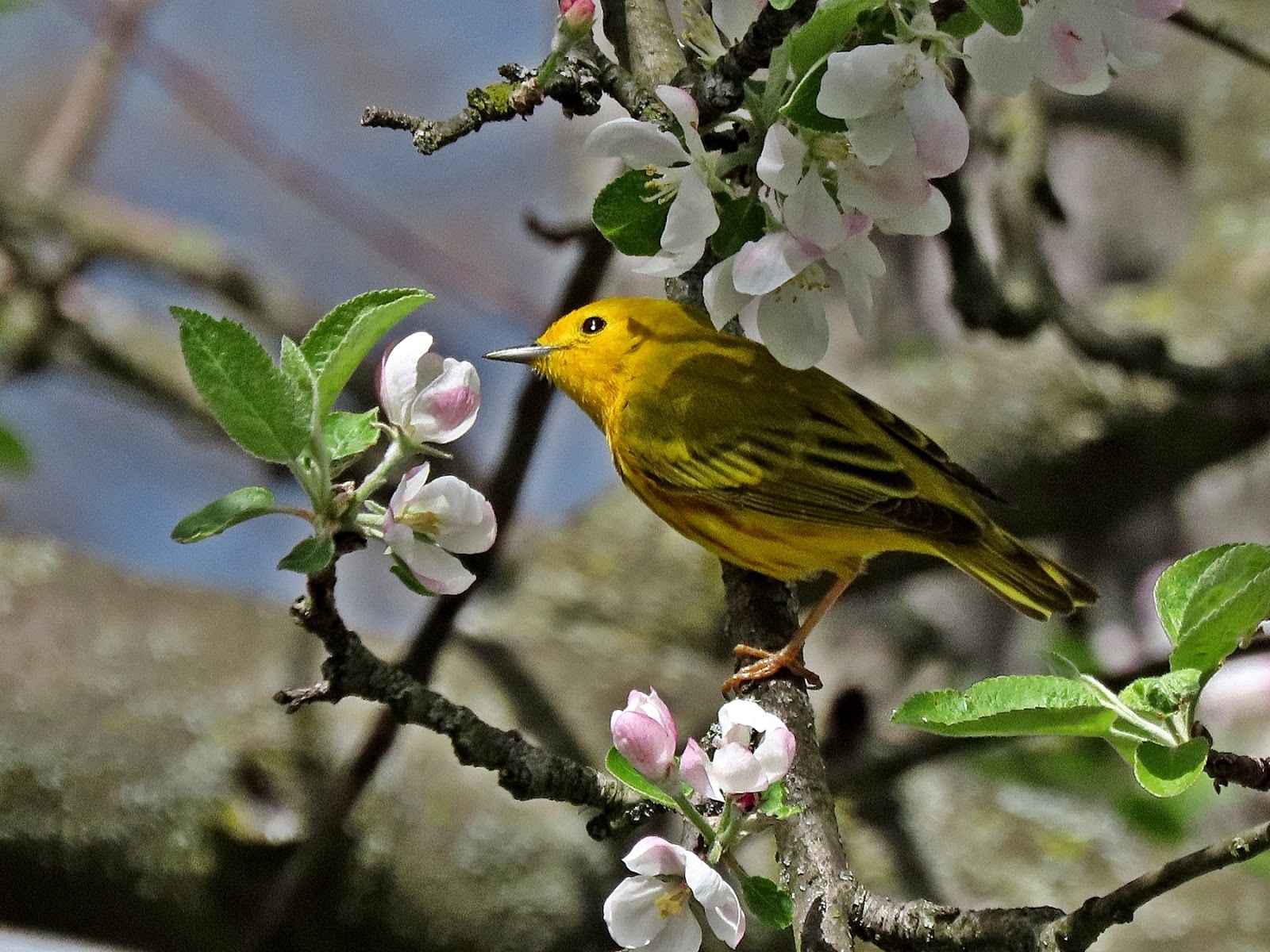
Depending on where you are, new leaves begin
to appear on trees, shrubs and vines from mid-March to late-May. Also depending on
where you are this may be called “greening up”, “leafing out”, “setting new
leaves” or something else that relates to the appearance of new leaves or
needles.
What most people don’t realize is that, in
almost all species, those new leaves have been there since last fall, tightly
furled in the buds that adorn the tips or sides of the twigs that rattled in
winter’s winds.
Some species leaf out much later than others:
ash, walnut, sycamore and black locust are examples. Years ago one of our neighbors cut
a beautiful white ash tree because “it was dead” – only it wasn’t dead, it was
just leafing out later than the other trees at his place because it was an ash.
 Newly expanding leaves are miniatures of the
leaves we see in summer and come in varying shades, giving the
hillsides a variety of color that will soon blend into the uniform green of
summer. A sampling of new leaves –
 |
| American Elm |
 |
| Willow |
 |
| American Sycamore |
 |
| Wild Grape |
 |
| American Beech |
 |
| White Oak |
 |
| Bigtooth Aspen |
 |
| White Ash |
 |
| Black Cherry |
 |
| Tulip-poplar |
 |
| Black Locust |
 |
| Red Mulberry |
 |
| Black Oak |
 |
| Red Maple |
 |
| Flowering Dogwood |
 |
| Quaking Aspen |
 |
| Pin Oak |
 |
| Chestnut Oak |
 |
| Shadbush |
 |
| Eastern Hemlock |
 |
| American Chestnut |
Depending on where you are, it may already be too late to enjoy the sight of
these small leaves before they expand to their full size, but they’re worth
examining next spring.
 Newly expanding leaves are miniatures of the
leaves we see in summer and come in varying shades, giving the
hillsides a variety of color that will soon blend into the uniform green of
summer. A sampling of new leaves –