Wednesday, March 30, 2022

Old Growth Logging

Back in the mid-1970s a friend of mine was in charge of cleaning out the building where he had his office before he, and the rest of the staff, moved to a new building. They were throwing away a large quantity of old unused “stuff” among which was an unlabeled film can.

As I remember, he said the can made it into the trash before he decided to see what was inside. After retrieving the metal can he opened it; inside was a reel of 16 millimeter film, again with no label. Since the office had a 16mm projector he decided to run the movie and see what it was before tossing it back in the trash.

What he found astonished him and those of us who saw it soon afterward. Apparently it was the sole existing copy of a film made in 1926 by an employee of the Central Pennsylvania Lumber Company (CPL) at Sheffield, Pennsylvania. The movie was of the entire operation from the uncut old growth forest through loading the lumber into railroad cars for shipment.

At one time CPL owned approximately 2,000,000 acres of forest, most of it old growth, in the northern part of the state; the company constructed or purchased a number of sawmills and towns throughout northcentral and northwestern Pennsylvania (Laquin, Masten, Grays Run, Jamison City, Leetonia, Norwich, Tiadaghton, Sheffield) and operated dozens of geared locomotives on hundreds of miles of logging railroads.

The sawmill at Sheffield featured in the movie was constructed in 1907-8 and operated until 1941 when the last log was sawn. It was the largest sawmill ever to operate in the state, and it’s one-day record was over 337,000 board feet (a board foot is the equivalent of a piece of wood 12 inches long, 12 inches wide and one inch thick) sawn in ten hours.

Fortunately I managed to obtain a DVD of the original movie (which was made almost 100 years ago), have been able to improve the exposure and contrast a bit, (but not much, especially the first few scenes), added some music and included the film in this post. It’s a bit over 20 minutes long, so sit back and view a piece of history –

CPL was typical of many lumber companies of its day – when the timber was cut the land was of no further use to the company and was sold. Most of the land logged to supply the mill at Sheffield became the Allegheny National Forest. In other parts of the state, hundreds of thousands of acres were added to the Pennsylvania state forest or state game land systems, some is now owned by other forest industries, and a number of tracts became large private hunting and fishing clubs.

While CPL and other companies cut vast acreages of old growth forest in Pennsylvania, there are still isolated areas that have never been logged; some are as small as 10-20 acres, others cover thousands of acres. 


If you know where they are, you can still walk amid a forest that looks like the ones the old loggers saw.

Wednesday, March 23, 2022

Waterfowl on a Beaver Pond

Snow geese kept me from checking the ice on two beaver ponds but several days later I was able to visit the ponds. One, although it had small patches of open water, was still almost completely ice covered. The other pond is much, much larger (probably about 25 acres) and, with the exception of a narrow strip in the shade of tall white pines, was unfrozen.


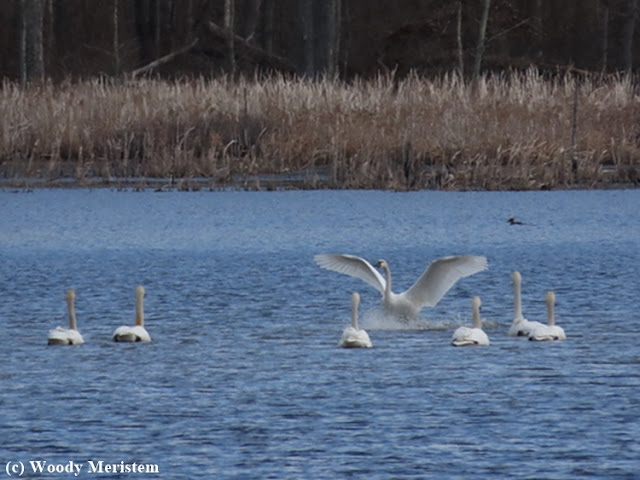
As I approached the large pond a large bright white object was visible. Closer still it became apparent that it was not one object, but rather a group of tundra swans. Amazingly they allowed a close approach and just continued with what they were doing –


In all there were over 100 Canada geese on the pond, some just single pairs and some in small groups –


And a variety of ducks: hooded mergansers –


Mallards and wood ducks –


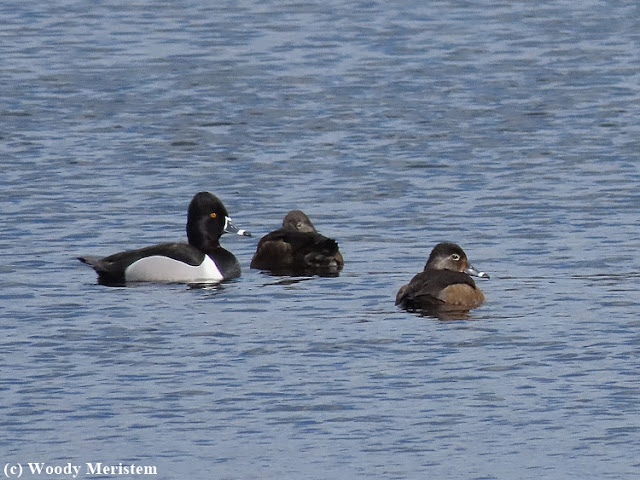
Ring-necked ducks, also sometimes called ring-billed ducks. The ring on the bill is much more obvious than the ring on the neck –


There were also two male lesser scaup, often called bluebills –


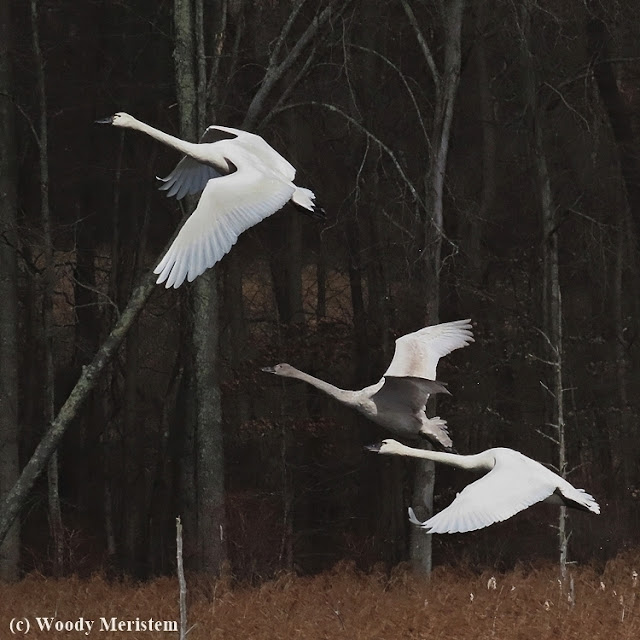
Even though they were the furthest away of any of the birds, wood ducks - being wood ducks - suddenly flushed and flew off, followed by the mergansers and mallards. That was enough for the Canada geese and off they went, as did a few of the ring-necked ducks. Lastly the tundra swans took off –


And like most of the ducks circled and landed far across the pond –


Unfortunately I’d disturbed the birds, something I wanted to avoid and which probably wouldn’t have happened but for me getting too close to the wary and skittish wood ducks.

Wednesday, March 16, 2022

Snows

Each spring large numbers of snow geese migrating from the wetlands of the mid-Atlantic coast to their breeding grounds in the Canadian arctic stop to rest and feed at the Pennsylvania Game Commission’s Middle Creek Wildlife Management Area. In recent years the number has exceeded 100,000 birds, in 2018 there were twice that number of snow geese at Middle Greek.

The peak numbers usually occur during the last week of February and the first week of March, and that’s when we, and many other photographers and birders, have gone to see them. For a number of reasons, including the large number of people, we didn’t get down to Middle Creek this year.

But then one morning as I was on my way to see if there was ice on several beaver ponds, our daughter called to say that she’d seen snow geese in a harvested corn field along the river. These geese were only about 20 miles away as the goose flies, a much shorter trip than going to Middle Creek.

Change of plans! The snow geese took a much higher priority than those beaver ponds so I drove on down and easily found the geese. My best estimate is there were about 10,000 birds feeding on the waste corn in the field as well as several dozen tundra swans. The birds were a long way from the road, perhaps 2,000 feet, the field had rolling terrain and there were waves of warm air rising from the field –


In among the large flock there was a scattering of blue morph geese. At one time they were considered a separate species, called blue geese, but the powers that be in the bird world decided the blues and snows were but one species. Here’s a photo of a blue phase goose I made in another place at another time

In the corn field a few birds would take off and leapfrog over the large flock then land to continue feeding –


Although they were too far away and the rising air currents too strong for good photographs, I didn’t want to leave the roadside and walk out into the field and disturb the birds. So I watched them for a while as two other cars stopped, the occupants got out, snapped a few cell phone pictures then got back in the cars and drove off.

Suddenly the entire flock took to the air, the birds circled the field several times, settled back down and then the birds resumed feeding –

I left the geese feeding in the field, went elsewhere and returned about an hour later – every last goose was gone, probably headed north toward the arctic.


Wednesday, March 9, 2022

In a Small Clearing

Since 2013 one of my camera traps has been located at a small clearing in the Big Woods. The clearing is in an area that was once an agricultural field, but the field last grew crops over 100 years ago. During the intervening years a diverse mixture of trees and shrubs have become established; that mix of species and sizes attracts a wide variety of wildlife.

The first camera at the clearing was a commercial unit that didn’t produce very good images. That camera was succeeded by a homebrewed camera built with a point-and-shoot digital camera and a commercially available control board. More recently, with the great improvement in commercial trail cameras, I’ve used one that yields video clips. Photos and videos from all those cameras and all those years have been posted on In Forest and Field.

In 2021, as in most years, the camera was in place continuously except for the big game hunting seasons when more people are afield. The video in this post consists of a sampling of the best video clips from 2021.

Among the videos captured last year is a piebald (leucistic) white-tailed deer with large areas of white hair on her rump, legs and flanks. She's appeared in a number of photos and videos from camera traps elsewhere in her home range of about a square mile –


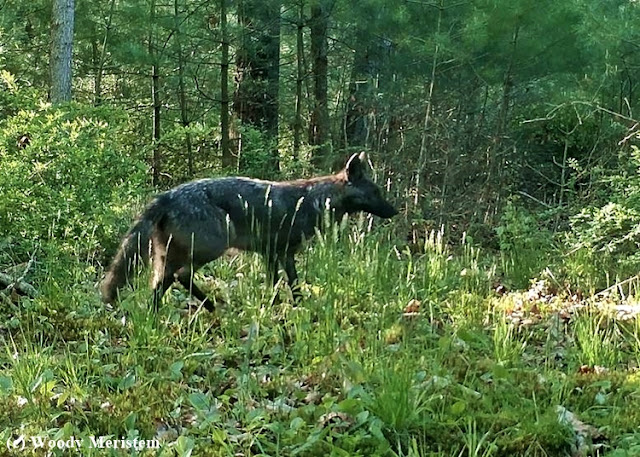
Also in several videos is a black (melanistic) male eastern coyote and his mate –


Both animals appeared in videos from this location in 2020 and before. A gray fox had never appeared in videos or photographs from this spot, but here it is. Once the fox appeared it was no surprise to see two animals since mated pairs often hunt together –


Have a comfortable seat and a cup of coffee and sit back to, hopefully, enjoy this long video –

The camera’s back on its tree awaiting what may pay the clearing a visit in 2022 – watch this space.

Wednesday, March 2, 2022

Just a Peek

There’s an entire world beneath our feet, almost always unseen and out of mind. It’s there nonetheless and impacts us in ways we barely understand. On a late-winter day when rain had been falling and there was every reason to stay in the house I decided to take a peek into that world.

So I went outside, basin in hand, and grabbed two handfuls of fallen leaves from the wooded area above the house. The basin became the repository of a totally unscientific sample of the leaf litter from the virtually intact leaves that had been on top, down through the skeletonized and fragmented leaves, to the top of the soil’s organic layer.

Back inside I began picking through the leaves, looking for whatever little critters might be dwelling there. My quarry were the small animals that could be seen with the naked eye or a hand lens, not the vastly larger variety of microscopic beings that would surely be there.

Here’s what I found (number found is in parenthesis) –

Spiders (2) – first was a little black ground spider yes, that’s its name not just a description. Ground spiders are fast predators that subdue their prey by running and jumping over it while laying down a mesh of sticky silk. This one was less than 3/8” long and lived up to ground spiders’ speedy reputation.


The second spider  was a very well camouflaged small brown crab spider (species undetermined) about 1/4 inch across. Crab spiders grab their prey with their front legs, pulling it inward and injecting venom.


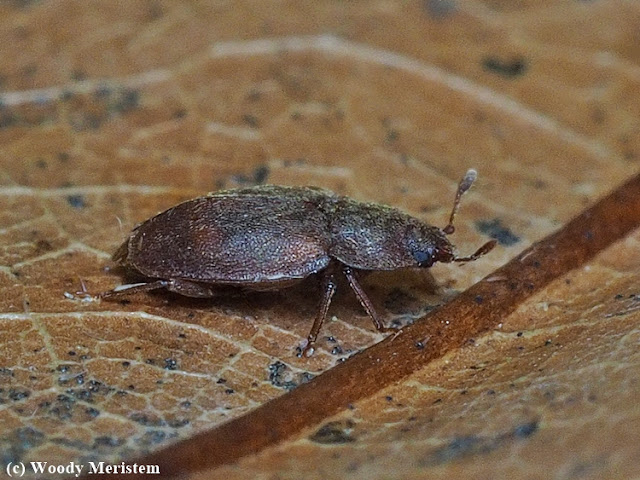
Beetles (5) – while there were different sizes, they all appeared to be the same species, but what species they were remains a mystery. The smallest were 1/16” long, the largest less than 1/8”. They're apparently a species that feeds on vegetable matter.


Earthworm (5+) – These were very young earthworms, no more than 3/8 inch long and virtually colorless. Earthworms feed on dead and decaying leaves. All earthworms had been eliminated in formally glaciated areas, including here, and our earthworms are invasive species originating in Europe.


Soil Centipedes (3) – with up to 137 pairs of legs they're burrowing predators that twist and writhe like snakes when picked up and burrow by expanding and contracting in the manner of earthworms. These were about an inch and a half in length although they were seldom still so it was difficult to estimate their size with any accuracy. As are all centipedes, they’re predators on smaller creatures.


Leafhopper (1) – at first I thought it had been killed when the leaves were gathered, but the flattened abdomen leads me to believe that it had died earlier and dehydrated or been sucked dry by a predator. What it was doing buried beneath layers of leaves that fell months ago I know not. Length less than 1/16 inch.


Larva (5+) – these were maggot-type larvae a bit less than 1/8 inch long and probably larvae of a species of fly although some beetle larvae are also legless. They were essentially transparent and all their internal organs could be seen.


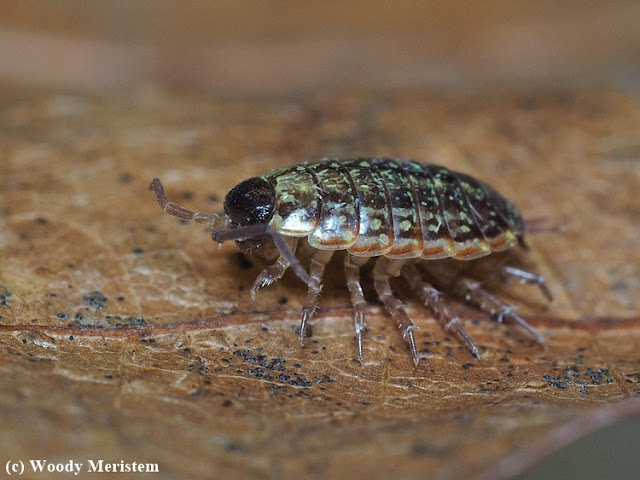
Sowbugs (8) – the sowbugs varied greatly in length, the largest being about 3/8 inch long, but seemingly all the same species. Sowbugs are crustaceans, distantly related to lobsters, which feed on decaying organic matter. Unlike their relatives the pillbugs, sowbugs cannot roll into a ball for defense.


Springtails (10+) – springtails of various species are extremely abundant in the forest floor. These appeared to be the species frequently called “snow fleas” because they’re often found in astounding numbers atop the snow on warm days in late-winter and early-spring. Springtails jump by suddenly releasing a latched mechanism beneath their abdomens. About 1/8 inch long.


These woods aren’t wilderness; they had once been a horse pasture, abandoned for 40-50 years and reverted to woodland before we built our house 51 years ago.

This was winter, admittedly far from the coldest day of the season, but there were still insects and other invertebrates to be found something interesting every day

In warmer weather I may have found a red-backed salamander, a large millipede, many more insects, or … ? This was an interesting exercise and a good way to spend part of a rainy day.

Wednesday, February 23, 2022

Otter Island

Before the arrival of Europeans river otters were found throughout Pennsylvania. But then the traps and firearms of the new arrivals, clearing for agriculture, logging of vast tracts and pollution of streams and rivers by coal mining reduced the otter population until, by 1920, the species was extirpated from all but a small portion of the northeast corner of the state. Otters hung on in the northeast because the soils were largely unsuitable for agriculture, there was no coal to be mined and pollute the streams, and there were large areas of wetlands.

By the 1970s attitudes had changed, trapping and hunting were regulated by seasons and limits, many farms had been abandoned and many streams were cleaner. And so in 1982 efforts began to restore river otter populations; over 20 years 150 otters, trapped elsewhere, were released in suitable habitat in northern and western Pennsylvania. Otters subsequently thrived to the extent that Pennsylvania now has a trapping season for otters.

H and I saw our first Pennsylvania river otter in the 1970s while we were canoeing on a lake in the far northeast of the state, well before reintroduction began. More recently I’ve seen otters much closer to home.


Walking along the river there’s always the chance of encountering a river otter. There are a lot of islands in the river, some quite large and some rather small. Those islands are often overtopped in high water events (better known as floods) and trap floating debris: large trees, logs, branches, docks, … Those piles of debris make ideal denning places for otters to rest or bear their young.

With ice on the river and snow on the island it was easy to see the most obvious sign of an otter’s presence – a slide created by an otter as it literally slid across the surface –


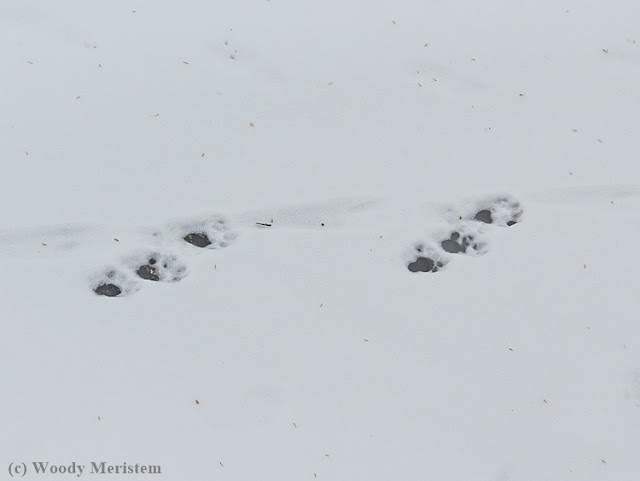
The otter also left tracks showing the typical staggered pattern of an otter’s loping gait –


Returning to the island on another day in hope of seeing the otter I saw another slide. This one led from an opening in the debris pile down to the frozen river and on to open water. After another snowfall, an otter had walked, not loped, up the slide to the opening in the pile –


The otter, or otters, using that island have remained out of sight but on another day an otter was swimming in the river about a mile upstream. 


Otters travel widely (a mile is nothing to an otter) perhaps this was the one from the island.

Wednesday, February 16, 2022

At the Tributary

Except for during big game hunting seasons, during the last two years I’ve had a camera trap at a spot where a wildlife trail crosses a small tributary stream. 


Other videos from the tributary were posted here. This year was no different with the camera strapped to the same tree from early last year until early November. Unfortunately several batches of bad batteries shut down the camera for a number of weeks in late summer.

If you really like white-tailed deer this video’s for you. As for squirrels, raccoons, both species of fox, birds of any kind, small mammals – not a one showed up on the videos taken by the camera.

Here come the deer –

The video clips display a wide range of white-tailed deer behaviors: bedding down several times beneath hemlock trees which provide important thermal cover on cold winter nights; that snow accumulates on their backs without melting due to the insulating qualities of deer hair; constantly testing the air for the scent of danger; repeatedly dipping their heads to test the air high and low and to simulate feeding to deceive a predator; repeated swiveling of the ears to pick up sounds and their direction; stamping the front feet when they're nervous to alert other deer and to signal a potential predator "I know you're there"; in the summer and early fall does travel with other does and their fawns and bucks form bachelor groups there's safety in numbers with more ears, noses and eyes to detect danger.

That was a young bear and not very large, probably 18 months old, chased away by its momma and looking for a new territory.

The eastern coyote was probably just testing the deer or they all may have been fleeing from something (possibly a human) but in my experience fleeing coyotes don't just lope along – they FLEE .

I like videos of deer as much as anyone, but enough is enough so next year that camera will be elsewhere to see what it can see.

Wednesday, February 9, 2022

Looking Beyond 80 – the second three months

Last August 3rd I turned 80 – and in so doing I consider myself to be extremely fortunate. H and I are still happily together after 57 years, our kids and grandkids have become responsible adults and I can still walk in forest and field virtually every day (just not as far or as fast as I could 50 years ago). Two of my friends, both younger than I, died in the last year so I consider every day a gift to be savored.

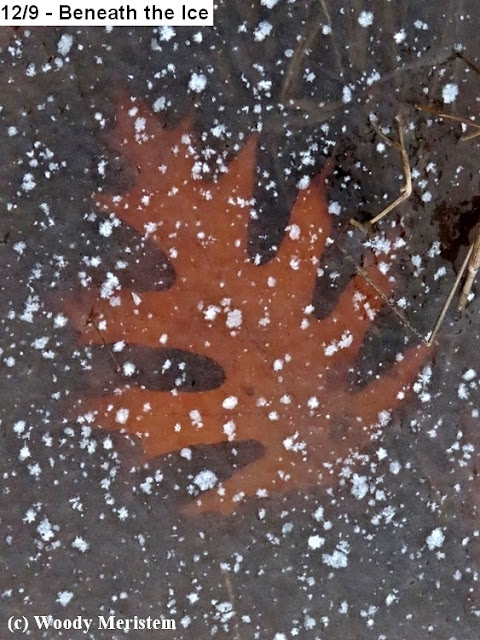
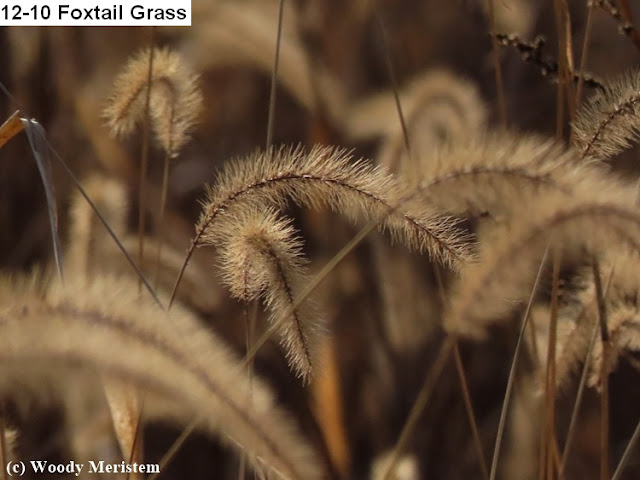
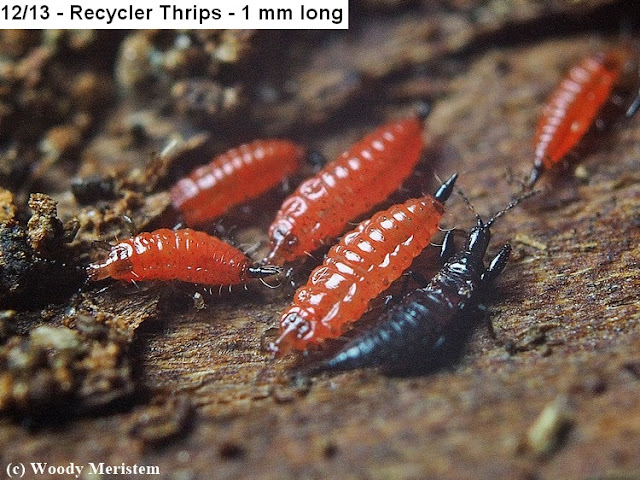
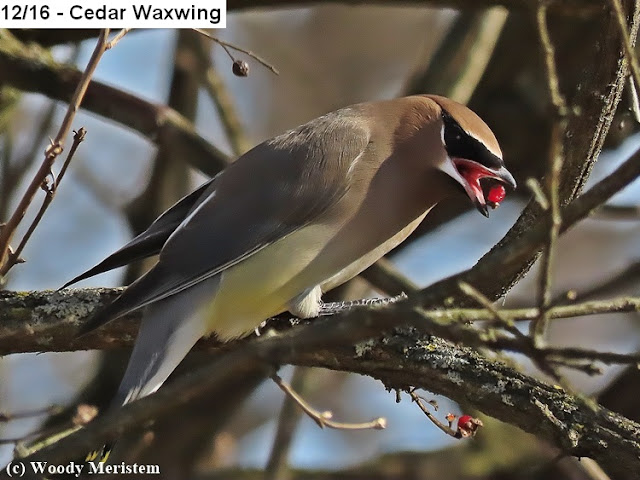
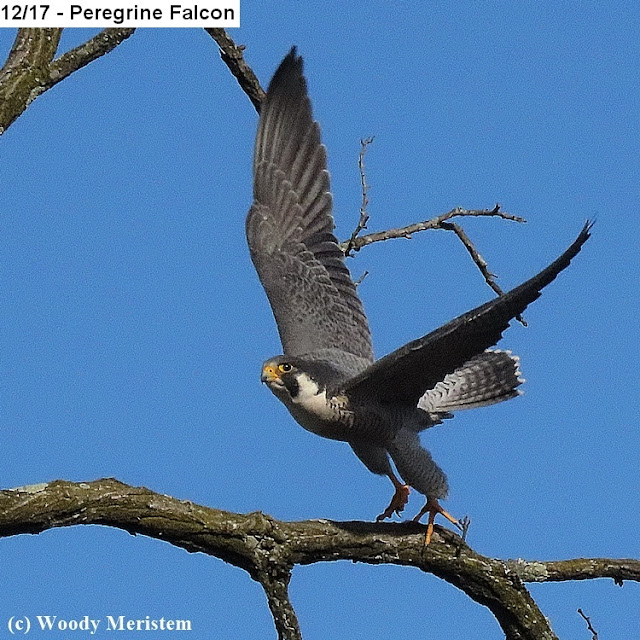
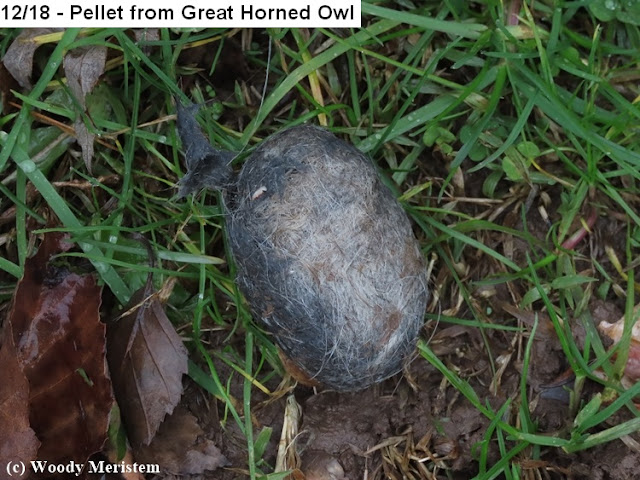
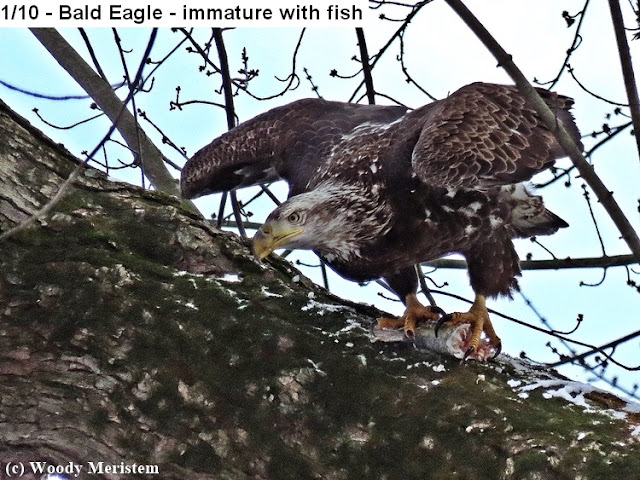
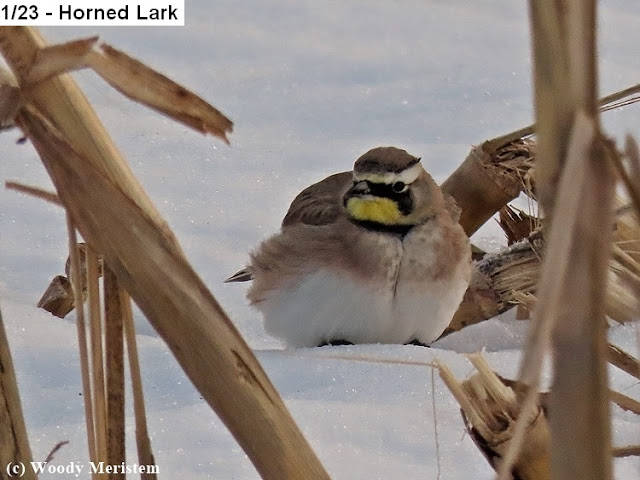
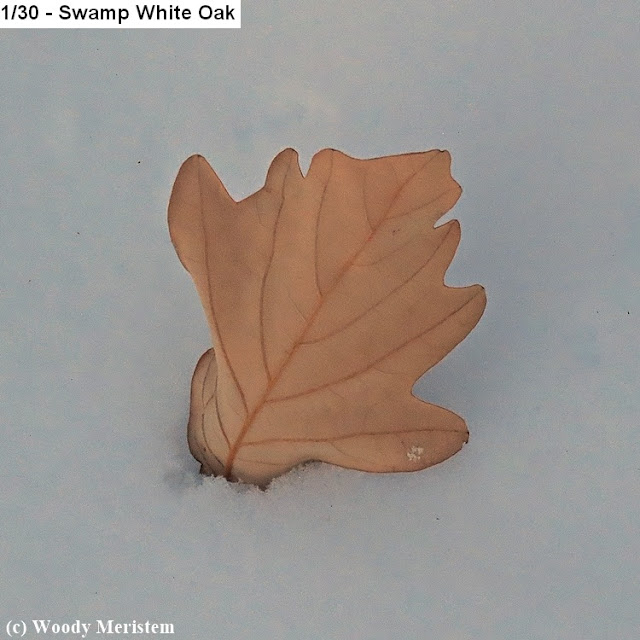
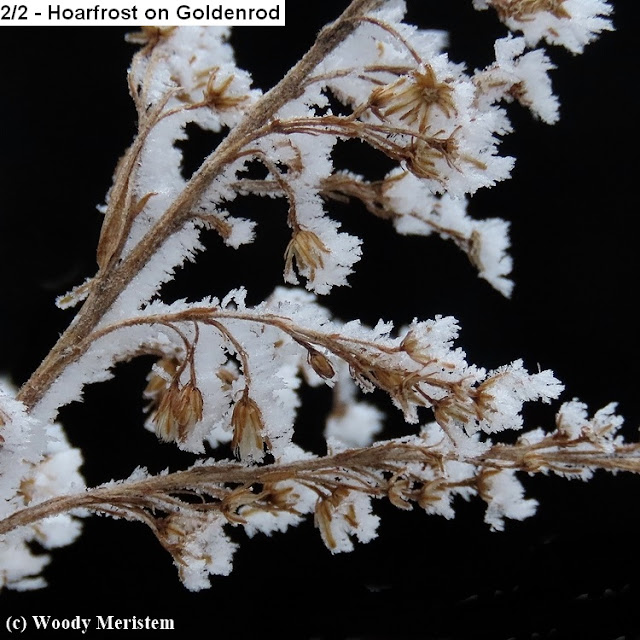
Several years ago, inspired by a renowned nature photographer’s article in a major magazine, I undertook a project to take at least one good, or at least interesting, photograph a day. That one project became three (all posted on In Forest and Field) and now a fourth – it began on my birthday and will continue for the year. The first quarter’s photographs were posted here, this post is a collection of the photos from the year’s second three months (photos from a camera trap are indicated by #). Herewith the photographs –


And so here we are, winter's two-thirds gone and spring's just around the corner soon the first migrants will be arriving, the first flowers of spring will be poking up through the soil, and trees’ buds will be bursting.

It matters not what humans think, the cycles of the natural world go on although we are messing them up to varying degrees. They have done so since before there were humans and will do so long after humans are gone from the earth. For now I'll keep taking a photo a day to post in early May.


#  from a camera trap