The
beaver pond is over the ridge behind the house and over another ridge
behind that. It sits in a wide valley, a valley with farmland and
woodland, and is fed by a small stream that flows through a
larger pond that also is the home to a colony of beavers.
One
of my camera traps has been at the beaver pond for several years,
furnishing photographs and videos for a number of posts on In
Forest and Field. Only once this year, in mid-April, have I seen
a beaver at the pond and their lodge is deteriorating from a lack of maintenance.
Every
once in a while it seems as if all the possibilities from a camera
trap location have been exhausted – and then …
Although
it seems that the beavers have now deserted this pond I’m leaving the
camera trap there throughout the summer – we'll see what turns up.
This week (July 17-25) is National
Moth Week, a celebration of those fascinating
and often colorful insects that are primarily nocturnal. Moths and
their larvae are an important component of forest and field ecosystems,
they’re a major – often the primary – food source for songbird
nestlings and adults. Some moths are important pollinators; others,
especially the litter moths, recycle fallen leaves while still others
can have major impacts on tree survival and growth.
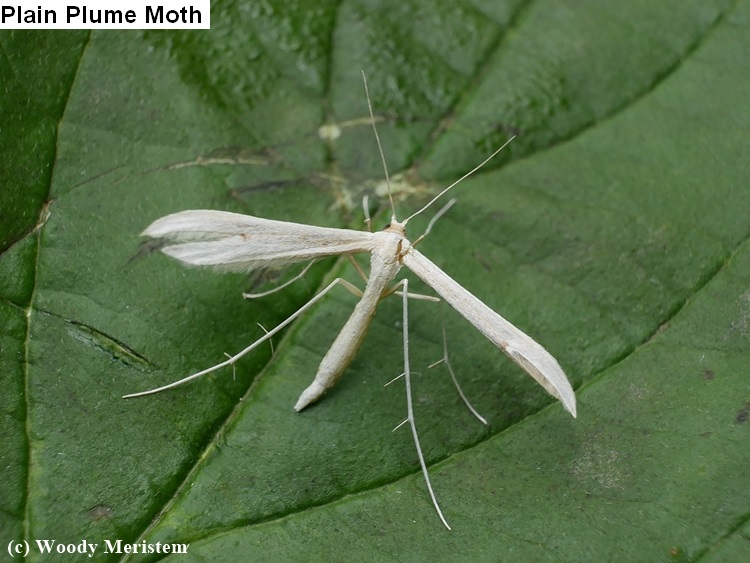
A
sampling of the moths to be found in northcentral Pennsylvania –
Speaking of moths, the Entomological Society of America just announced that it was dropping/changing the name "Gypsy Moth" because it was perceived as inappropriate and offensive to the Roma people. Will it also change the names of any moths that might be perceived as offensive including: "The Hebrew", "Finnish Dart", "Spanish Moth", "Setaceous Hebrew Character", "The German Cousin", "The Old Maid", "The Slowpoke", "Old Man Dart" and the entire group called "Quakers"? Just asking!
Early
summer, the forecast was for temperatures in the low 90°s, not my
kind of weather. But at dawn it was in the 60°s, rising to just over
70° by the time we’d finished breakfast. So H drove me to the top
of the ridge where I could walk an old, old road down into the Big
Woods – downhill all the way to where we’d left my car.
The
ridgetop is occupied by an oak forest, perfect food for caterpillars
of the accidentally introduced gypsy moth. Pieces of oak leaves were
scattered on the ground; gypsy moth caterpillars are sloppy eaters –
A
short way further down the old road several rattlesnake-weed plants
were in bloom –
On
down the hill I went until suddenly a great commotion arose from the
bracken fern and black huckleberry growing alongside the old road. The loud
sound and thrashing set me back for a moment until I realized that it
was a female wild turkey protecting her young. She burst from the
plants sounding her alarm call loudly, spreading her wings and
running across the grassy road as her poults scattered and hid.
She
continued to run around me in ever-widening circles, calling loudly
all the time. I missed getting the beginning of her display, but
here’s a bit of the performance she put on –
When
she first exploded from the vegetation I saw several of the poults, one poult ran to a large fallen branch a side of which was off the ground.
As the hen got further away I decided to look for the poult beneath
the branch. It took a while, but there it was –
Turkey
poults often hide beneath fallen leaves and there’s always the
danger of stepping on a hidden poult. Poults that survive their first
two weeks of life can fly short distances, greatly increasing their odds of survival.
With
that it was time to move on and allow the turkeys to reunite. Although later there were photos of flowers and a stream, the turkeys were the highlight of the morning. The rest of my walk
through the Big Woods was uneventful, and then it was time to head
home and stay cool.
It’s
not the end of In
Forest and Field. Instead
it’s the end of keeping a camera trap where it had been for five months because the
reason to have one there is now gone. Except for some hair, all the
remains of the dead white-tail doe have now been eaten or disbursed
into the forest ecosystem in which she spent her life.
After
the doe’s death she fed a myriad of creatures – eastern coyotes
being the largest, the smallest being microscopic life forms, some
of which are probably still unknown to science.
Some
of the songbirds came to gather hair for their nests, some came, no
doubt, to feast on the insects that had fed on the doe’s remains.
Most of those insects would have been flies and beetles, but there
may have been others.
On
this video is the only camera trap image I’ve ever captured of a
woodland jumping mouse, a rodent that few have ever seen and that
spends much of the year hibernating underground. Years ago I was
fortunate to be able to photograph a woodland jumping mouse –
You
can never tell what may show up on a camera trap.
Much
of the U.S. and Canada have been excessively hot recently. When it's
over90°F
at the house it's too d--m hot and it's been that and more for
several days. Today it's 94°F at the house with additional days over 90°F forecast for early nest week. To help keep cooler, I'll transport you
back a few months –
Some
say the world will end in fire,
some
say in ice,
… ice,
Is
also great
And
would suffice.
Robert
Frost
Personally,
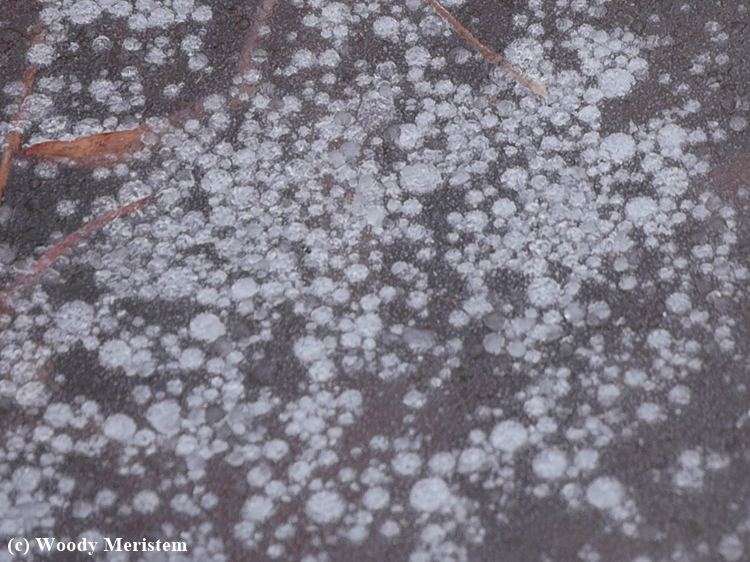
I favor ice and find the photographic possibilities in ice are great
and do suffice.
Winter’s
long over and winter's ice is long gone and but a memory. There’s
ice that is a dangerous nuisance – as was the ice on which I fell a
number of years ago and smashed a camera in the process. Six of my
ribs were broken and the camera was smashed beyond repair.
But
there’s also nice ice that creates beautiful formations on
waterfalls, on the edge of running water, on still water and on
branches.
Here’s
a selection of that nice ice –
Ice
is ofttimes nice and sometimes not, but it can be beautiful and cooling, whether cooling a liquid refreshment or merely in our memories.
It’s
a little known fact, but the earthworms most gardeners and many
fishermen like so much are invasive species. Prior to European
colonization there were few, if any, earthworms in northeastern North America because the native species had been eliminated by the glaciation that
ended between 10,000 and 15,000 years ago.
As
our European ancestors arrived in North America they brought familiar
plants with them; the soil in the containers in which those plants came also held European earthworms. More recently Asian earthworms
have arrived with imported nursery stock.
The
forests native to previously glaciated areas of the northeast evolved
without earthworms and are ill-equipped to survive on soils where
earthworms thrive. What’s the problem? ... you may ask. Well,
earthworms eat the leaf-litter and organic upper layers of the soil
and their castings mix with the mineral soil that is normally found in lower soil layers. Seedlings of many northeastern trees have
difficulty becoming established on soils where there’s no leaf
-litter and many of the herbaceous plants found in our forests can’t
grow in those soils either.
Forests
that contain invasive earthworms are often characterized by a lack of leaf-litter, herbaceous plants or tree seedlings, poor tree growth and an
abundance of invasive plants like barberry and Asiatic honeysuckles.
Songbirds,
insects and small mammals suffer and may vanish as the leaf-litter and small plants
disappear.
It’s
in one of those unhealthy forests where I placed a camera trap. That camera trap recently captured a video of a barred
owl catching a meal. At first the prey appeared to be a mouse with
it’s tail dangling from the owl’s beak, but that wasn’t the
case. A closer look and a few more videos quickly revealed that the owl was catching
earthworms.
The
owl was the night shift, followed by a broad-winged hawk on the day
shift –
There
were many more videos of the barred owl eating worms than of the
broad-winged hawk doing the same, but then earthworms are more active above ground
at night – hence the name, nightcrawlers.
Some worms may not stand a chance, but it will take more than an owl
and a hawk to rid this forest of the invasive earthworms.
Unfortunately, there’s no known way to reduce or eliminate invasive
earthworms.
On
a beautiful morning in early June (clear as a bell, blue sky with a few
fleecy white clouds, a gentle breeze) I headed for the Big Woods to
change the batteries and memory cards in a couple of camera traps.
Not far along the old road on which I was walking a cottontail rabbit
crouched in the grass –
At the same time, in
the distance a white-tailed deer browsed on a shrub’s fresh
green leaves and began to walk away as I got closer. It turned out to
be a young buck –
After walking a
couple of hundred yards along the old road something off to the side caught my eye. That something was another white-tail buck, this one with large
wide-spreading antlers –
Not far beyond it was time to leave the old road and head into the woods. Recent
rains had brought forth a number of fungi fruiting bodies –
Jelly-leaf Fungus
Conifer Polypore
Beefsteak Polypore
Walking on, something
jumped next to my boot.
At first I saw nothing, but a closer look revealed a small wood frog
well camouflaged among the fallen leaves. Can you find it?
There
it is –
And
up close –
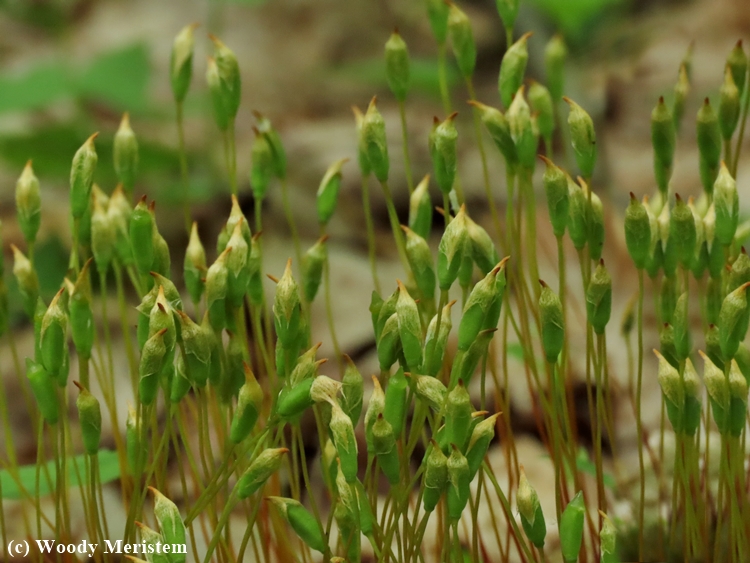
At
this time of year the haircap mosses are getting ready to release
their spores –
There aren't many openings in the Big Woods, but there are a few. On
the far side of one the larger of those old fields stood a white-tail doe with her fawn,
the first fawn I’d actually seen this year. The doe was the piebald female that
my camera traps have captured many time over the last several years. Because of the distance it's a really poor photo but ... –
Arriving at the camera trap, it was easy to see that the
camera trap showed signs of a “bear attack”. Black bears are
exceptionally
curious and intelligent; in the Big Woods it’s seldom that a bear
passes
a camera trap without messing with it. However,
in other areas that never happens – which has led me to believe
that it may be a learned behavior, passed from a
female
to her offspring –
Learned
or not, my camera traps are often askew and when the memory cards’
contents are reviewed there are images of a bear or bears.
As
noon approached it was time to head home for lunch and then to mow
the grass – I’d rather shovel snow
than mow grass, but that’s another story.
While
I was mowing a strange “thing” flew past. A closer look
revealed the thing was a mating pair of bee-like robber flies, a species that
closely resembles a bumblebee but cannot sting –
Quite
a morning with the afternoon bonus of the robber flies.