Wednesday, July 9, 2025

Lady’s-slippers

Wild orchids have fascinated me for 50 years give or take. Wild orchids, not the delicate hybrid orchids of the sort that are sold in florists’ shops and super markets.

The wild orchids of the northeast range widely in color and size, some are plain green while others are brightly colored. Among the largest and most colorful, and my favorite wild orchids, are the lady’s-slippers. Here in the northeast we have but six species, only three of which grow in Pennsylvania.

The most common lady’s-slipper here is the pink lady’s-slipper or moccasin flower that prefers acid soil, which we have in abundance. Like all wild orchids, this species is dependent on a mycorrhizal fungus growing on its roots to acquire nutrients from the soil.


In June of 1978 I found a colony of thousands of these orchids in bloom in a red pine plantation.


As many times as I’ve returned to that site, which has since been logged, there have never been more than a dozen plants in bloom –


Many years ago in central Maine we came across a colony of pink lady’s-slippers with white flowers – what a find –


Much less common and essentially confined to rich soils is the yellow lady’s-slipper –


At one time I knew of three locations in our county where yellow lady’s-slippers grew. White-tailed deer browsed two of those colonies into oblivion while the third has been greatly reduced by browsing combined with shading by Japanese barberry.

The only other lady’s-slipper to be found in Pennsylvania is the rare showy lady’s-slipper that grows in alkaline fens in the far northwestern part of the state. The showy lady’s-slipper is both the largest and most colorful of our lady's-slippers 


In 1978 The Naturalists
 journeyed north into New York to a limestone fen where we photographed several small white lady’s-slippers. The small white lady’s-slipper inhabits the same fens as the diminutive rattlesnake known as the massasauga and another rare orchid, the arethusa.


Several years ago I returned to that fen in hopes of getting some more photos of small white lady’s-slippers. My hopes were dashed when I couldn’t find a single plant although they apparently still grow there.

Two other very rare lady's-slippers are found in the northeast that do not grow in Pennsylvania one of which I photographed a long way from home in Grand Teton National Park, courtesy of a friend who worked there. However, this orchid does grow in New York and New England; it’s the calypso or fairy slipper –


The remaining northeastern lady's-slipper is one that's extremely rare and I’ve never seen, the ram’s-head lady's-slipper.


There are other species of lady’s-slippers found in the U.S. but these are the only ones native to the northeast. All 
lady’s-slippers are beautiful, some are endangered and most of the rest are declining due to unscrupulous collecting, browsing by deer, habitat loss and a changing climate.

Wednesday, July 2, 2025

The Second Two Weeks at Home

During the second two weeks after I left the hospital I walked further, spent more time in the yard – when it wasn’t raining – mowed part of the lawn, got the last of the infusions of antibiotics and began catching moths at night.

Unfortunately, as in most of North America, our songbird population is diminishing, as is the population of insects upon which those songbirds depend to feed their young.

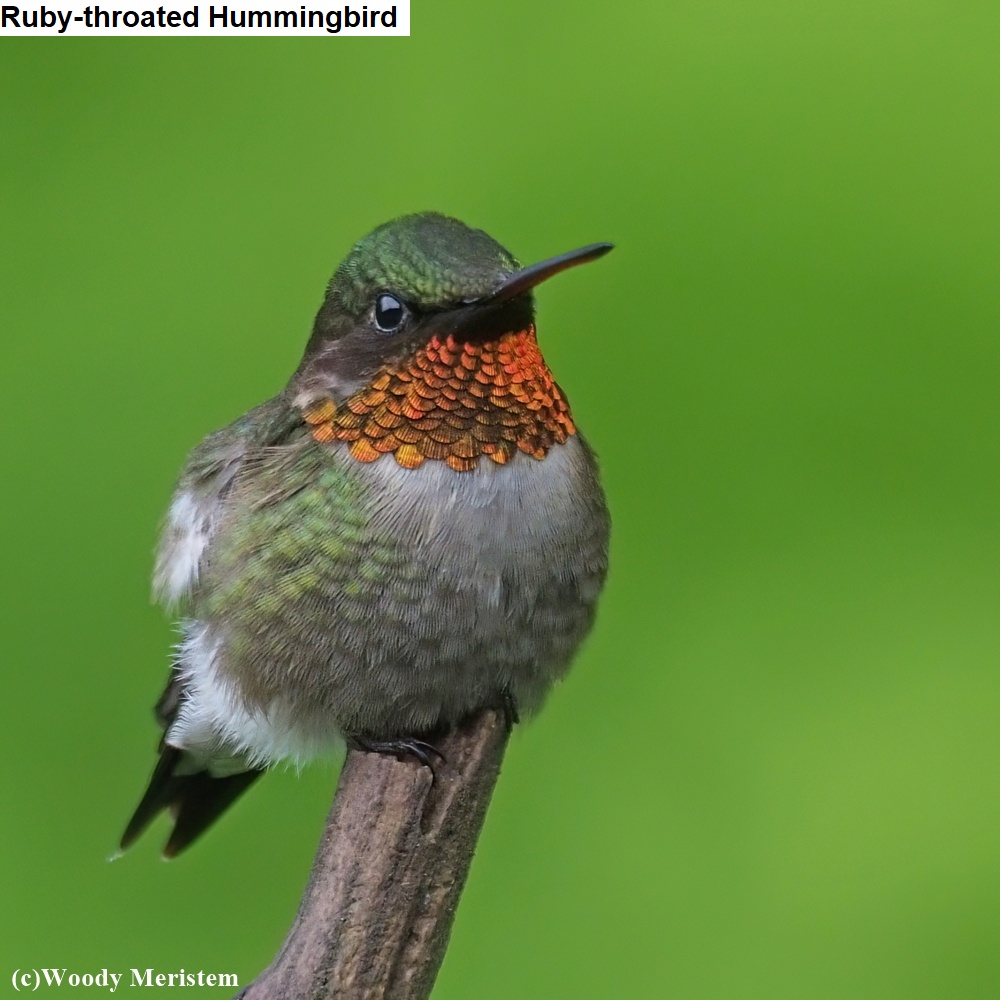
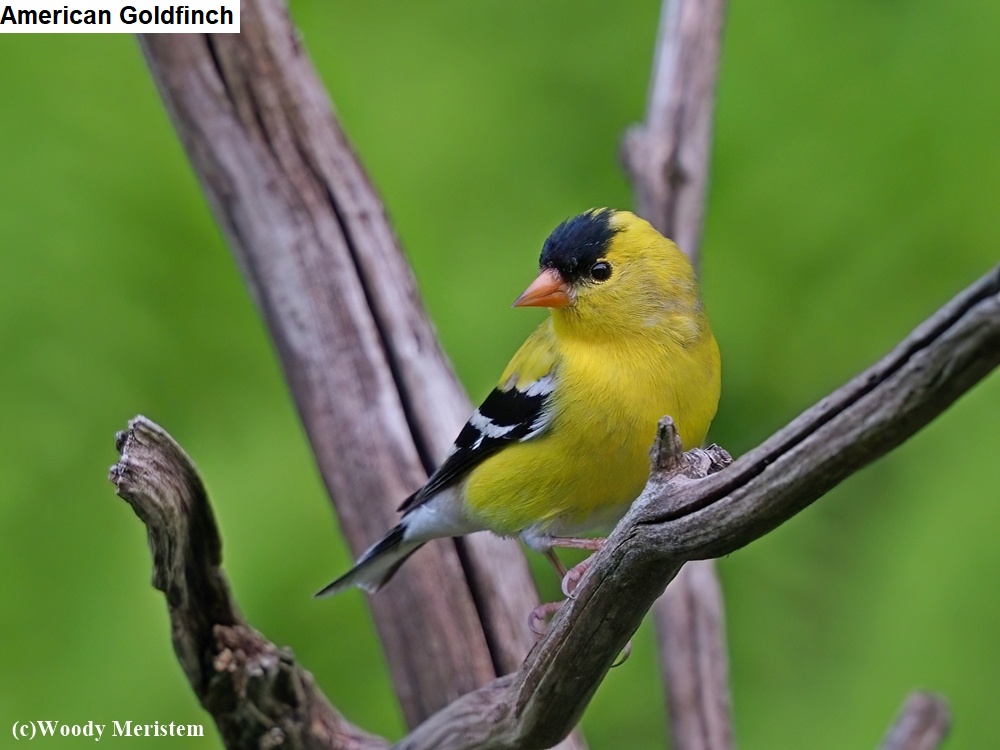
Here are some photos from my second two weeks at home – all taken within 50 feet of the house 


That broad-banded hornet fly may look like a hornet or wasp, but it's actually a fly that feeds on flower pollen and nectar; they cannot sting and are harmless. The white flowers on which the hornet fly and several other insects are pictured are the blossoms of silky dogwood shrubs.

H has taken me for several rides, hopefully in the next few weeks I’ll be capable of once again driving safely and walking in the woods – we’ll see.

Take a look around your place – you may not have white-tailed deer, but no matter where you live there are still plants and critters to see and photograph.

Wednesday, June 25, 2025

Three Months in the Fencerow

Three months, February, March and April, spanning late winter to mid-spring. A winter with little to no snow, and what did fall didn’t last long, no more than two or three days, before it melted.


But there was wildlife in the fencerow. 

Male white-tailed deer lose their antlers each year, anywhere from November to April; the two bucks in this video have each lost one antler. Bucks' second antler may be lost at the same time as the first, or it may hang on for hours, days or, in rare circumstances, a few weeks.

In spite of the presence of gray fox and weasel, gray squirrels and cottontail rabbits still abound in the fencerow. Predators can't eliminate their prey lest they too be eliminated; obviously both are abundant in the fencerow  –


One clip in the video has two gray fox, mated pairs of which often hunt together.

The fencerow lies between two old fields: one was a pasture which is now occupied by blackberry canes, grasses and forbs, black walnut saplings and autumn olive shrubs. The other field was used to produce hay for beef cattle and is now occupied by several species of grass and some goldenrod and milkweed.

Long-tailed weasels prey on small mammals up to the size of cottontail rabbits. My camera traps have gotten more videos of these weasels on this property than anywhere else  why I do not know.

And those blue jays: Blue jays feed heavily on oak acorns, burying hundreds, often thousands, to retrieve and eat in the lean days of winter. Only about 25 percent of those acorns are ever retrieved and thus spread oak forests into open areas and woodlands. Blue jays are the primary means of spreading oak forests, and will probably be the principal way oak forests move north as the climate changes. 

Wednesday, June 18, 2025

Stuck at Home

In the two weeks after I came home from the hospital I was still getting infusions of antibiotics, still on anti-seizure medication that makes me very sleepy (resulting in one or two long naps a day), with balance still not good and with some extremely tight neck muscles resulting in occasional painful spasms. A fall resulting in a traumatic brain injury and a subsequent blood infection of unknown origin is not a good thing to have.

But I could walk about 1,000 feet down our road and back as long as I had company, I could walk or sit in the yard with my camera taking photos of wildflowers, fungi and the critters that visited, a few really small subjects brought out the macro lens.

Here they are, two weeks worth of photos from my cameras while I was recuperating at home –


All of the photos were taken within 50 feet of the house, some through the kitchen window, but I'm eager to get out in the forest where I've spent much of my life.