Wednesday, September 1, 2021

A Great Day

It was in many ways an ordinary day, but a great day as well. As I drove over a ridge to one of my favorite places to walk in forest and field a fledgling common raven flew up from the roadside to land at a convenient distance for a portrait, a photograph that became the picture of the day for August 15 –


Parked the car and headed through an old field on my way to a beaver pond. In the field a small butterfly flitted about; it turned out to be one of the large number of confusing butterflies called skippers. Later, the photograph enabled me to identify (I think) it as one called “the black dash” –


In the beaver pond a beautiful great egret stalked the shallows searching for a frog, a fish, or any other small creature worth eating. Great egrets don’t breed here, but a number wander north in late summer –
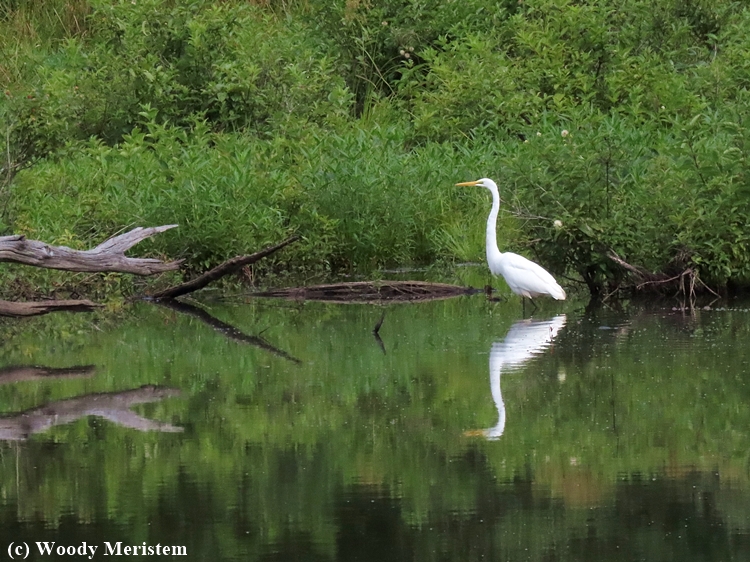

I watched the egret for a while as it caught a small fish and shortly afterwards a great blue heron swooped in to chase the egret from “its” pond –


Beyond the beaver pond is a patch of woodland that hasn’t been disturbed for at least threescore and ten years, and in that woodland I found a northern eudeilinia moth spending the daylight hours beneath a small leaf. It wasn’t well hidden since its wings protruded from each side of the leaf –


Nearby was a small cluster of orange pinwheel mushrooms standing about an inch tall –


Then it was past a large wetland where, in the past, an American bittern had resided for a while –


I headed back to the car through another old field where eastern tailed blue butterflies abounded –


So yeah, it was in many ways an ordinary day in forest and field and yet still a great day.

Wednesday, August 25, 2021

It's Rotten

Anyone who knows me knows that I don’t like summer with its heat and humidity – an abundance of biting insects doesn’t make it any better. Earlier this summer the daily high temperatures in northcentral Pennsylvania were in the 90°s with humidity to match – UGH!!!! Those days also featured ticks, biting midges, mosquitoes and deer flies.

Thunderstorms that came along with the the heat and humidity often brought those unpleasant days to a close. The night before this was written the storm lasted 3½ hours and dropped over two inches of rain.

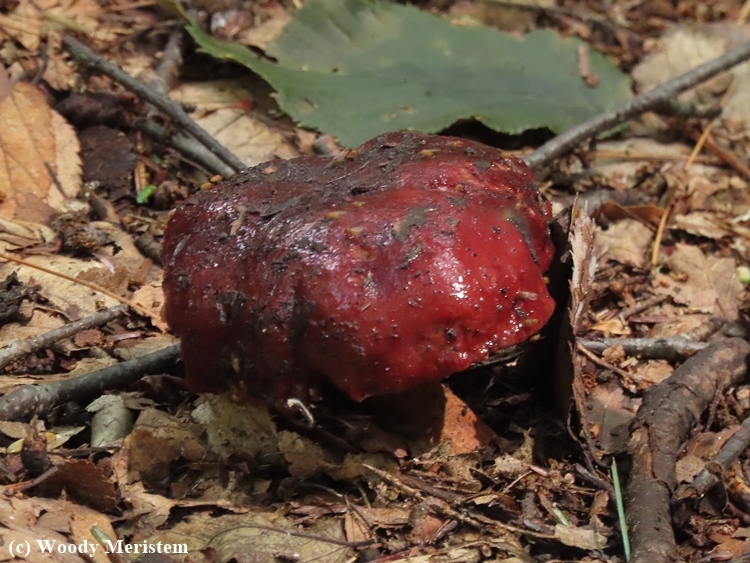
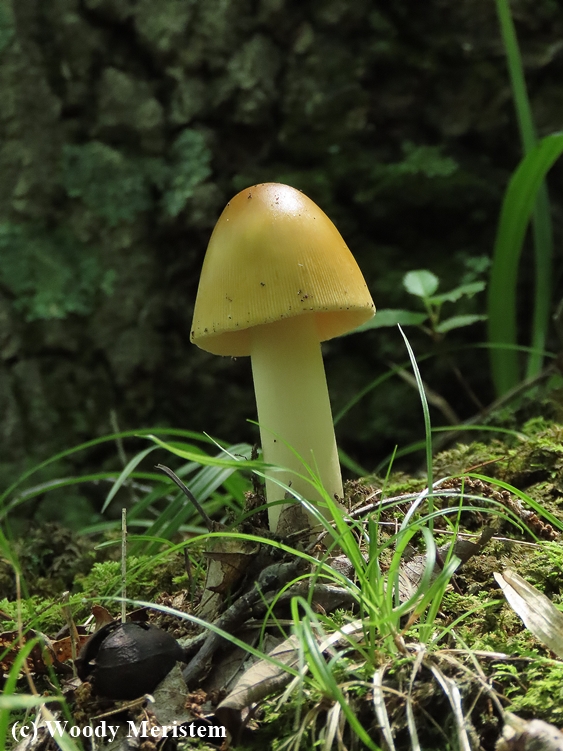
While I may dislike summer’s weather and think the combined heat and humidity are absolutely rotten, many fungi thrive under those conditions. Although some species are easy to identify, many are very variable. I've not found my field guides to fungi particularly helpful in identifying fungi, so please don't ask me to identify any of these interesting and colorful fungi that have produced their fruiting bodies in the last few weeks


Fungi are really interesting, most of their substance is unseen: underground, inside living or dead plants or animals, even as a component of lichens. 

There are fungi that live on the outside of other organisms, among those are athletes' foot and ringworm and this entomopathogenic (insect infecting) fungus on a stag beetle


Many trees and all of our orchids rely on
mycorrhizal fungi on their roots to acquire nutrients and/or water. Fungi are also responsible for much of the decay and elimination of dead plant material. And, if you like cheese or bread or beer or mushrooms on your pizza you owe a debt to fungi.

Many living creatures also eat fungi; from other fungi, to slugs and insects, to rodents and deer –


So when you’re out in forest and field don’t just look at birds and deer and wildflowers – fungi are worth a look too. Don't eat any you can't absolutely positively identify since a number of species are deadly poisonous.

Wednesday, August 18, 2021

Little Things

Our son and his family live quite a way from here in an idyllic setting on the side of a mountain. Thanks to COVID-19 we hadn’t seen them for well over a year, but once we were all fully vaccinated we’ve been visiting once again.

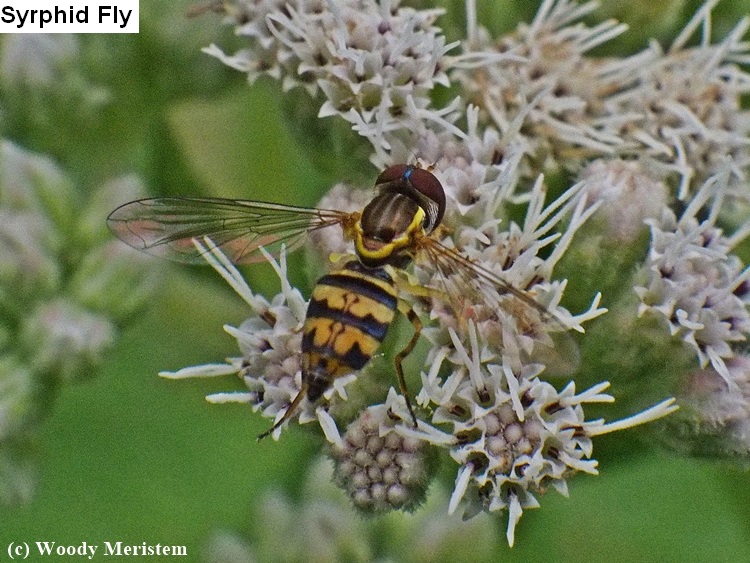
Just behind their house is a small pond with native vegetation around the edges. The pond isn’t very large, covering about a quarter acre. Like many ponds that don’t have manicured edges it attracts a wide variety of wildlife – deer and otter and mink, ducks, geese, herons and many species of songbirds; it has at least five species of fish, frogs of several kinds, salamanders and a horde of insects.

Because it’s right behind their house we’ve often sat inside and watched the wildlife in and around the pond. This summer our son and I made two circuits on a path around the little pond; we looked for some of the smaller creatures attracted to the pond-side vegetation. This wasn't a careful census or a bioblitz, we were just casually looking to see what we could see.

Some say “It’s just the little things that make life interesting.” There are a lot of large things that also make life interesting, but small things greatly add to life’s enjoyment. Here are just a few of the small things we saw in about 20 minutes –


The real prize of this little excursion came as a surprise; it was the clematis clearwing moth we found in a tangle of vegetation that included wild clematis –


This species appears to be quite uncommon, there may only be one specimen in the Smithsonian's collection and fewer than 75 locations listed in any reference I consulted. To help reduce predation, these attractive day-flying moths mimic some spider-hunting wasps and are therefore probably frequently overlooked by naturalists.

Yes indeed, little things ARE interesting.

Wednesday, August 11, 2021

Frog Fight

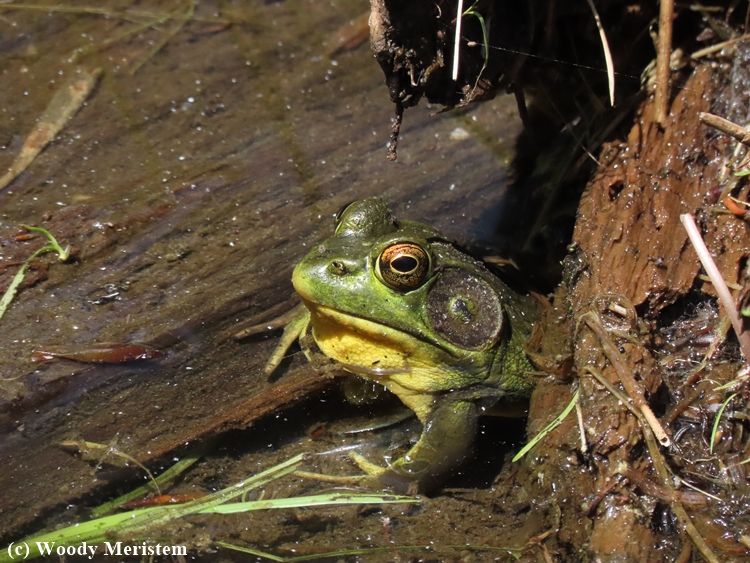
Walking along a recently abandoned beaver pond we were, our son and I. Although the beavers have apparently moved on to create a new pond, this one still held a lot of water – in fact it was almost full. At intervals along the pond’s edge green frogs waited to catch a meal. The male frogs were calling to attract girl frogs and intimidate rival males.

Green frogs are common in freshwater wetlands throughout the eastern United States. They will travel fairly long distances overland between wetlands and quickly colonize new areas. Green frogs can be distinguished from the larger bullfrog by their distinct raised dorsolateral ridges where their backs transition to their sides.

Female green frogs are larger than the males; the males have bright yellow throats and larger tympanum (an ear-like organ), double the size of the eye –


A female green frog at the beaver pond shows that females’ tympanum are smaller, about the size of their eye –


As we walked along we saw a disturbance in the water. At first it seemed it might be caused by a pair of mating frogs, but no – it was two male green frogs in a tussle.

The males would occasionally call and repeatedly bump chests which included much pushing and shoving –


Eventually the larger of the two males seized the smaller around the chest in a dominant position –


After watching the goings-on for a while we moved on. As for the outcome, we don’t know. In the past I’ve seen female wood frogs that have been drowned by amorous males. Being cold-blooded, frogs don’t need as much oxygen as mammals or birds so the the smaller frog may have escaped before it drowned – we’ll never know.