Saturday, March 29, 2014

Spring Is in the Air


Four days ago it was 17° F at the house when dawn broke. In the Big Woods most of the snow has melted, but there are spots in the deep hollows and narrow valleys where snow and ice still lays in cool shady spots. Nonetheless, spring is in the air. April showers have arrived a bit early, with light rain on Thursday and again this afternoon and a temperature in the 50s yesterday. When I left the house this morning a Carolina wren was singing in the oak tree in the yard.

Heading for the Big Woods this morning, I passed a field where a small flock of wild turkeys were reacting to the lengthening days. All five toms in the flock were in full display, three of them within pecking distance of each other.

There was an occasional gobble from yet another tom that was out of sight in the woods, but I never saw one of the displaying birds respond. The hens in the field didn’t seem to pay any attention to the displaying males strutting around.

The colors shown by the males are truly striking, varying with their orientation to the sun.


After 60 years, I still remember my first sighting of wild turkeys as my father and I drove to town; they were also the first he’d ever seen. The wild turkey has been a wildlife management success story. For all practical purposes turkeys were extirpated from much of the northeast by 1900. Many states tried to reintroduce wild turkeys using pen-raised birds, but these efforts were an abject failure – birds that could survive in a pen were unable to survive in the wild. In 1936 the Pennsylvania Game Commission attempted to improve its success by penning hens in ten-acre enclosures in the few areas where wild populations remained. Wild toms could fly into the enclosures to mate with the hens; eggs were collected and the poults reared and released. Years ago, in a remote area of the Big Woods along a small stream I found the remains of one of the pens: chestnut posts and rusty woven wire fencing.
Turkeys are back in all of their historic range no thanks to the release of pen-raised birds, but because trap and transfer of wild birds and restrictions on hunting resulted in expansion of populations. 

Sunday, March 23, 2014

Waterfowl and More


Walked in the Big Woods on a pretty morning as a gentle breeze rocked the treetops. High above, the clouds were being pushed rapidly eastward by a wind out of the west-northwest. Below the clouds a steady stream of Canada geese headed north at a very rapid rate – from the speed at which they were traveling, the wind at that elevation must have been from almost due south. Along with the flocks of geese were several flocks of northbound tundra swans. The swans’ calls always seem particularly haunting, speaking of far away places that few of us will ever see.
 
Several days ago I went to State Game Land #252, created from the old Pennsylvania Ordinance Works where TNT was manufactured for a short time during World War II. Of the roughly 8,000 acres taken for the Ordinance Works, roughly half was eventually transferred to the Pennsylvania Game Commission and became SGL #252, where the flat terrain and poorly drained soils facilitated construction of a number of wetlands. I had gone to the Game Land earlier this week expecting to find a lot of migrating waterfowl in the wetlands, but with one exception they were still covered with solid ice. There the sounds of waterfowl came from behind some thick vegetation, the birds out of sight until they flushed – pintails along with one black duck.
The next day on the river there were more waterfowl: Red-breasted mergansers
Ring-necked ducks –
Including one pair that was fairly close to shore –
Wood ducks –
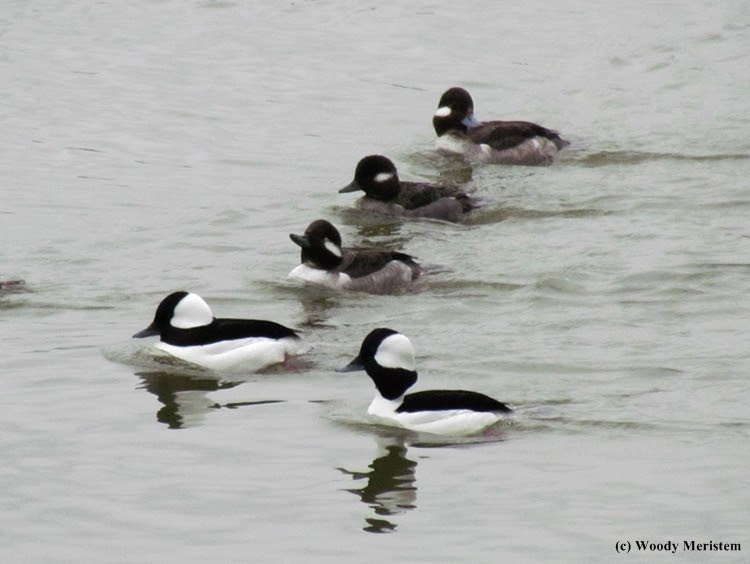
Buffleheads –
And lesser scaup accompanied by a horned grebe –
Also on the river and on the shore was a large number of ring-billed gulls –


In a riverside tree, the same tree in which the local breeding pair of peregrine falcons has frequently been seen, was an immature peregrine – One fledged from the nearest nest, or a wandering bird looking to establish its own territory? And, is there something particular about that tree that makes it particularly attractive to the falcons? 


Saturday, March 15, 2014

Ice Out


For the past few weeks the river, except for fast water sections, has been frozen bank to bank. It’s been a number of years since that much ice has formed on the river. But then, on Wednesday, rain fell heavily for several hours putting about ¾ inch on the ground – a warm rain that melted over a foot of snow at the house. Upstream areas also received heavy rain and lost a lot of snow.
The rapid inflow of runoff raised the river by over eight feet, breaking up the solid sheets of ice and carrying them downstream. At the same time, ice from upriver came our way, so for many hours the river was still ice covered – but the ice was not in solid stationary sheets. Instead it was in a mass of churning pieces, constantly on the move headed downstream. For most of Thursday ice flowed constantly, until late in the afternoon there was open water on the north side with mini-icebergs flowing past.


Yesterday, as I walked along the river there was still a bit of ice flowing past, just the remnants of the large masses that had been there 24 hours before. With the open water there was a large flight of ring-billed gulls, headed upstream on their way to the Great Lakes. Some of the gulls rode the chunks of ice for a while, before taking off to continue their upstream journey.
Apparently also arriving as the ice left were some male canvasbacks that stayed just beyond the narrow strip of ice that was still moored to the bank. Were they the same birds that had been on the river at the end of February, or had those birds moved on and been replaced by more recent migrants?
Not far from the canvasbacks a muskrat had climbed out of the water onto the shore ice and spent quite some time grooming its fur.
This morning there was a stiff northwest wind - high above the house flocks of Canada geese were heading north. These weren’t resident birds that had wintered on the small areas of open water, they were long distance migrants flying high and having difficulty holding formation as they flew into the wind. 


Saturday, March 8, 2014

Dumb and Dumber


At times it appears that some of Pennsylvania’s legislators – too often even a majority – just can’t pass up a chance to demonstrate how little they know or care about natural resources. Just two examples from the past few months –
The “Endangered Species Coordination Act” (House Bill 1576 and Senate Bill 1047) which would require all species of plants, birds, mammals, reptiles, amphibians, mollusks, and insects now on the state list of rare, threatened or endangered species to be re-listed within two years or loose their designation. In addition the re-listings would have to go through a lengthy regulatory review process by an agency with no expertise in any biological science, and subject to the political machinations of the legislature.
Showy Ladys-slipper
Hundreds of species of concern, but not yet rare, threatened or endangered, would immediately be eliminated from any consideration in permit applications for mining, drilling or construction. Those are species that are rare in Pennsylvania, but may be more common elsewhere. Protecting uncommon species in the states is an excellent way to prevent them from becoming listed under the Federal Endangered Species Act. But the proposed legislation would appear to protect only those species already on the Federal list.
Timber Rattlesnake
Another ridiculous provision of the bills would open the database, including the locations, of rare species to anyone who took the time to look. So, any unscrupulous collectors of rare plants, dealers in unusual reptiles, or developers who wanted to eliminate an impediment would have ready access.
The U.S. Fish & Wildlife Service has warned that the Game Commission (which oversees mammals and birds) and the Fish & Boat Commission (which has responsibility for fish, reptiles and amphibians, mollusks, and aquatic insects) would loose a total of $27,500,000 in Federal funding for wildlife programs if these bills are enacted.
Spotlighting the legislature’s ignorance is that one of the bills’ prime sponsors was prompted by the cost of mitigating the impacts of a project in his district on a Federally listed species, a requirement that wouldn’t change one iota if these bills were enacted. DUMB!
 
Balsam Poplar
As if dumb isn’t enough, here’s DUMBER. The Pennsylvania House of Representatives has just passed legislation, the “Coyote Control Incentive Program” that would permit the Pennsylvania Game Commission to pay a bounty of $25 for each dead coyote and would authorize the use of up to $700,000 of the commission’s budget for the bounties. This is the first bounty the state would be paying in 50 years, and is rationalized as giving hunters an incentive to take more coyotes.


Currently, Pennsylvania allows coyote hunting year-round with no limit on how many coyotes an individual hunter may kill. The data is incomplete, but there are estimates that in 2013 hunters killed more than 40,000 coyotes in the state. It doesn’t take a mathematical genius to figure out that $700,000 wouldn’t even be adequate to pay bounties on the number of coyotes already being killed. Of course that $700,000 would have to come out of productive wildlife management programs or wildlife law enforcement.

Bounties have been paid on coyotes in western states for decades without significantly reducing their population. Coyotes have such a high reproductive potential that 70 percent of the population would have to be removed each year to cause the population to decline. Nebraska’s coyote population kept rising throughout 68 years of paying bounties and Missouri had its highest coyote kill 31 years after beginning bounties. Only a fool would think that Pennsylvania would be any different.


It’s well known that coyotes have a compensatory response to population fluctuations – if their population is low and food plentiful more offspring survive and vice-versa. Bounties, indeed any hunting, tend to eliminate the young and dumb animals – and the smart, wary, more nocturnal and adaptable animals survive to breed a “super coyote”. 

Now it’s time to get off the soapbox and go back to photographing wildlife.

Thursday, February 27, 2014

Dang Cats


In 2013 the camera traps at the edge of the woods behind the house caught several different house cats – some only once, others quite regularly. We don’t have a cat, nor do any of our immediate neighbors and none of the cats wore a collar; so where did these cats come from?
https://blogger.googleusercontent.com/img/b/R29vZ2xl/AVvXsEiAxZtqHfrc2-HBsdYBy-dZrLuAclI17fc1UHYmSH-Wx6jwBzC6nNEAAhCAsZ8t5GZm4i1qmysipfMrX-B9sy2QgcXQvOkOqY6avZNfhVxLLyF0L8KqI0CWlaTBBui7VngsBY_Woqg10NI/s1600/House+Cat+2-4-2013.jpg                                
https://blogger.googleusercontent.com/img/b/R29vZ2xl/AVvXsEibIxNlBSnTdgnzKn4W8V7U2wXWobSIgDiAXaBXHOazERQ69yQ_AM0zYxpMtMKsUyQcxVxvhH3KgVAJZE8eVLM2rtJ7amg8vzgG4cHyMf4FbMMMIQv1Cg20So3e_fy9BouCnXtlxcp1B8k/s1600/House+Cat+4-20-2013.jpg                              
https://blogger.googleusercontent.com/img/b/R29vZ2xl/AVvXsEj8_9MQxfwM_J-O9h3wgW8RS4rn4s5F0q7n9Obdqg-VzkMqevBHwua5oheY288DY7WuUS0l6-Es34XaopCLLDD26GR2s3Zz1W0xlSrxgrhv_SUGXF9qhLZBgFJPsMu1EMppoSXEhc9GTVU/s1600/House+Cat+9-5-2013.jpg
https://blogger.googleusercontent.com/img/b/R29vZ2xl/AVvXsEjoHdKGrSm7DjJabJbOzeM1aOI9LQK-dEjPkdBRkeAMu1LL3KK7EzdMHmXkJrhhEYxjNtjSGMftnXxDf9rMJrmN4bX9wrbWNJrPA6cfQWNE5Dr6aHhjP7OBpwxP50dJjgju-71crW9E5xg/s1600/House+Cat+4-28-2013.jpg     
                                  https://blogger.googleusercontent.com/img/b/R29vZ2xl/AVvXsEj7xZPQpOsnXtv1_v84NbykC_BvbOwXA3ktVZpiFr7Qi7TDWV2bE0IrL4a-yA9RKeSPuF4PkdzvJVHg-Cc16maRuyD2M8meiitcB7-gSoaqPY8V8QVyQrcMn1VZ9UaEnE7bfq6FbD2ysig/s1600/House+Cat+9-25-2013.jpg
The University of Illinois, in 2011, reported on a two-year study of free roaming house cats that yielded surprising results. Radio collars were placed on 42 adult cats, both feral (un-owned) and pet cats that were allowed out to roam. One of the feral cats had a home range of over 1,350 acres. The pet cats were relative homebodies with an average home range of about five acres.
Now I’m a fan of predators – coyotes, bobcats, foxes, weasels, shrews, hawks and owls are much more interesting to me than their prey. But, I’m no fan of free roaming house cats! Most of those cats are, to some degree, fed by people, either their owners or kind-hearted souls who put out food for the feral cats in their neighborhoods. Those well fed cats continue to kill, not to eat but to fulfill their predatory instinct.

Some may argue that house cats merely take the place of wild predators in developed areas. But the population density of house cats, feral and roaming pets combined, is typically far higher than the populations of the wild predators they’ve supposedly replaced.

According to ScienceNews (February 2013), a team of biologists associated with the Smithsonian Conservation Biology Institute estimates that cats kill between 1.3 billion and 4 billion birds and between 6.3 billion and 22.3 billion small mammals each year in the United States. That’s billion – with a “B”. The bird kill is estimated to be about 15% of all the birds in the U.S.

Birds and small mammals have high mortality rates for a wide variety of reasons, from predation to disease to vehicles and pesticides. But the additional mortality due to house cats almost certainly pushes some species of wildlife over the brink in certain landscapes.

Unfortunately, many cat lovers don’t realize or won’t acknowledge the havoc that house cats cause to populations of native wildlife – or maybe they just don’t care.

Signs of Spring

February 17 – It was 9° at the house this morning, but the sky was a brilliant blue without a cloud. On the telephone cable along the road a male cardinal was singing away. This wasn’t the short weak song we typically hear on pleasant winter days – it was a full-throated territorial song typical of spring.
https://blogger.googleusercontent.com/img/b/R29vZ2xl/AVvXsEioewgCM1xjJP26hG5gpOhizIN0a_bjZSiB6DvvpryxIOhnDXKZnP13yL-saFAE6Eq_Wu5V4Nb-KQTOobNXiXsrtsvJCNbXytVcyNqBh-ea6MeJOcar_8m8GZE1QMKmWpUTPL3fhJ54EgU/s1600/Cardinal.JPG
Cardinals are year-round residents and maintain their territories (although not too vigorously) throughout the winter. Earlier in the winter three different pairs of cardinals visited our feeders, but since the days of cold and snow have arrived there’s been but one pair here. Did the other birds succumb to the weather or did the dominant pair drive them away?

Further down the road a small flock of robins fed on the shriveled fruits of an ornamental crabapple.
https://blogger.googleusercontent.com/img/b/R29vZ2xl/AVvXsEh-VDX5dpgbXb_-TmBCb2bgEAYc3Tx4FB7hXCwbuUJHaVVOWtIe5rTCSlCnPnsivEoMDnTtO2-syFY64YKBrK0jeYYp-5iuR3mF0O0Dd-IqtKiDOFNkOR7nFx6ZQAn4j5f_v-lvL_UIyhw/s1600/Robin+(m)+-+a.JPG
Most years a few robins winter in the lowlands and wetlands near the river. But, these birds weren’t near the river and it appeared that all were males. Perhaps they were birds that have been wintering in the area. Or, perhaps in spite of the snow and cold the most adventurous male robins are heading north already. That would give them a chance to claim the best territories, but also put them at risk of perishing in a late winter storm – some years these early birds would win, some years they’d lose.

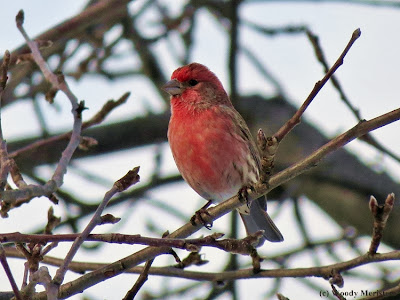
February 18 – A male house finch in the apple tree displayed his bright breeding color and was accompanied by a female, the only house finch to be seen near the house this day.

For a few years many of the house finch we saw had conjunctivitis that affected their eyes to the point that they couldn’t see well if at all – it’s doubtful if any of those birds survived. But for the past two years we’ve not seen a house finch with conjunctivitis. Presumably the birds that were very susceptible to the disease were eliminated from the population and birds that had some resistance remained to produce subsequent generations. Survival of the fittest on display.
                                https://blogger.googleusercontent.com/img/b/R29vZ2xl/AVvXsEgKZjDUNnwvH1D0qo7sNNhQmDKCBm8pKVIyQZhU5MEwuhbG53ybn4EfNNIsmOgcoaqnzcDGtrHvyBpScE5f-6RrSw3Sol_Yb4tN3A3dRGh2PuHrOoepdgK3ieWGxJ9YUQHtUEymv9QS5R4/s1600/House+Finch+(m).JPG


February 20 – The flock of robins appeared at the house today, picking the fruits from an ornamental holly at the corner of the house.
https://blogger.googleusercontent.com/img/b/R29vZ2xl/AVvXsEg-VWKvbpkVsTD9SuBTFrtCLwD6k061lmIyB7YzoknfRlVsV0In4a1rNaIOPurhXgAARdWmItPKDn1pEgVZBinv8e-eXBPU5BZvgEvr889bY_jE6KmWsBMafv_DklbLD2c9USD6HiQg21M/s1600/Robin+(7).jpg 


Some of them perched in a small white pine, seeming to bask in the sunlight. They’re making the rounds of the neighborhood, feeding on any remaining fruit they can find. The temperature was well over 40° F this afternoon melting several inches of snow; but there’s still well over 15 inches of snow on the ground. Will the snow melt before the fruit is gone?

https://blogger.googleusercontent.com/img/b/R29vZ2xl/AVvXsEg9h5NI7HZmdshvxkdExINPQ4oHAEkpgsjUq26ka1r8iCfigFclN4XGJQ92v1zLaY1Mv83gR92hF_YSFmAUwug949uL_Gr5Uk8v-QH2L-iaNtgnnMZYt-ESu184KhZG62JZ3NtN4c3FJuM/s1600/Coopers+Hawk+(1).JPG 

February 21 – Down along the river, in addition to the cold rain typical of early spring, there were even more signs of spring: An immature Coopers hawk sat on a limb, looking rather bedraggled in the rain. I’d prefer a lower temperature and falling snow to rain at 36°, would the bird?


In the river there were some early migrants: a lone horned grebe –
https://blogger.googleusercontent.com/img/b/R29vZ2xl/AVvXsEgU8yDIkX_3Q5JuWeXRi1Gp3QvmYAAYG_9Lu_JHNKbaWoFBPD7ymQmC2ZpGS2zKayW8jjceh8MkH9vzg51CxTO8XZzKiMJbFKdMaVT70Pb1JK5opBe7tBhru70EpnADG7lUJCdFY38BdQg/s1600/Horned+Grebe+(2).JPG
And several pairs of hooded mergansers –
https://blogger.googleusercontent.com/img/b/R29vZ2xl/AVvXsEiRIlPKaoI-30NKDa5KSSaQ-t6nzl_nCzR1kJkHEGNlcl7Se10BPMalGEyvF_nAB9T72qTCFBmeHqVs0HdYJn0k0WJ4tXZtVlQdhgbL3eyY7DoOikWHbmxiNTJg6tkn-DqEQsI3U0rLnIQ/s1600/Hooded+Merganser+(1).JPG
https://blogger.googleusercontent.com/img/b/R29vZ2xl/AVvXsEgoc9bBUEShUVCgKhmCYlaPmu3IajwZqSqLqzdHHPCk6XUSDixOlTpPQPXdTKccwGTkr3CaGWS9uulrGK1jfDtIsgAKfQwfV7m88CPwHk97Ta3E21CoApBkp_erCddEkg55kswYIXZcQ-w/s1600/Silver+Maple+Buds+(1).JPG


The flower buds on the silver maples are swelling, ready to burst into bloom. They're the first trees to flower in the northeast, and do so long before their leaf buds open.


The signs of spring will be appearing more rapidly now, and even though we may well have more snow and low temperatures, the lengthening days are triggering changes in plants and animals that prepare them for the arrival of another season.

36 Hours


This week a span of 36 hours gave us a good taste of winter.

Two days ago it was  -4˚ F in the morning, clear with only a few clouds in a brilliant blue sky, just a very slight breeze and 8-10 inches of snow on the ground – a great day for a walk along the river, where the slack-water sections were frozen bank to bank with only a few small areas of open water. But the riffles were unfrozen as were portions of the river just below those sections of fast-flowing water. It’s still winter but faint stirrings of spring are becoming apparent. 

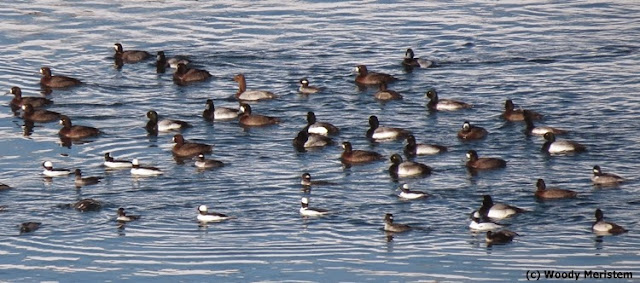
In one section of open water there was a small raft of diving ducks, migrants in all probability since they seldom winter here:

Lesser scaup – https://blogger.googleusercontent.com/img/b/R29vZ2xl/AVvXsEgsLeTMIGYCz8sNgyIvUx-tigifjCXc7pEhbpykbB9Lcan4qGV2i_2MKSDDzTDPro04ErMwWn4eg6P0Odmuc_my2FM2wjr4gHXJ-kQZ0nkA-7LZbaoJuFGxyMu2fJZBz0Gs47YWzWnDEZ8/s1600/Waterfowl.JPGAnd perky buffleheads, my wife’s favorites –
https://blogger.googleusercontent.com/img/b/R29vZ2xl/AVvXsEjV9pumD7Z_1RKFpp3Ey_G3KG2927veF30XBrnD9tUQGB7poIbweE52sFEQO458b84gKPi7vaIb0JaC3thCd89ZJM-WIuWfYltfF2D3igezAKxOCamTChu9o8-_XsK1udNC_EkQGYponkI/s1600/Bufflehead.jpg
And a few male canvasbacks showing the brilliant white backs from which their name is derived –
https://blogger.googleusercontent.com/img/b/R29vZ2xl/AVvXsEjj1os2gqKOiX14jDIbjPKQB_EPLallO-KCBueykPxcheWbaYDHtCTyAnacWZ83Tz-hN6nUPsUjZI_d8__qDNpK2Uu_NaE8oN9vQ1LTxb7UUUbHHmcGJHlGw_1Dv116iV8DPD1N1r1U1lo/s1600/Canvasback.JPG
They may be rushing the season to be this far north and on an inland river, but here they were.

An unusual visitor to the river was a male white-winged scoter clearly showing the white feathers that gave the species its name. This bird was so far out in the river that even a 1,200-millimeter lens didn’t yield a crisp photo. Scoters occasionally show up on our larger lakes, but are seldom seen on this section of the river –
https://blogger.googleusercontent.com/img/b/R29vZ2xl/AVvXsEgnCdIoxMVbIfrZXSOGM5CSf8ESefc8QHshDmyByZvsnZyWnz2848eRlW5uIO7WEUsFxJFzcyPw8Rr4BZMS9Icrb1E1vYdkc3rY10QGeFDyLWNhyNOF51AOCci1CvG2vaq9AONCYIPQTdI/s1600/White-winged+Scoter+(2).JPG

https://blogger.googleusercontent.com/img/b/R29vZ2xl/AVvXsEhyf9wkghku0Du8Gm3JfIBWyH704hULQ64JSclbE1VuSSBJVLr2MbSbWwoW_e5CRL7RM-vSdvGtQYMDEfuXCf823r9yUcdRS3dj5Igu40sqtXxmayN-abT6XELXsVdKTJVVgBkVlqlv2VE/s1600/White-winged+Scoter+%281%29.JPG
  
https://blogger.googleusercontent.com/img/b/R29vZ2xl/AVvXsEhUjMpIRakcfYCmfwAbxvumBL9MeV2FxgsJkHbSHOp8HDXUrXPGJ61OEhDaJufOmy7RFGv2soldTh4TlHgAEyQ5DXpZg3eNcCERhIhAsL-bZhOgBO3duVxL6jI04NAChC-IxWZYbBiZRV0/s1600/Bald+EagleJPG.JPG


Overlooking all the waterfowl was an adult bald eagle in riverside tree.


So far this has almost been an old-fashioned winter; cold enough, but with much less snow than we used to get in the olden days – that is, until yesterday morning. Woke up to temperatures in the low 20s and falling snow that continued until after sunset. By the time it stopped we had 7 ½ inches of new snow at the house and a total of about 17 inches on the ground. South and east of us more snow fell and some folks were having real problems. While I happen to like cold weather and snow, many people dread winter and avoid leaving the comforts of a heated house, car, office or store. That’s too bad since they’re missing out on the pleasures of a beautiful time of year.

As snow continued to fall late yesterday afternoon the conifers were covered with the new snow –
 https://blogger.googleusercontent.com/img/b/R29vZ2xl/AVvXsEiyQnRVeoDWEfQmvDGwmS5YGRXz_X67kA-_tmf2ur1yuXDaeiB0JXaKoevhCt8bi-Ftw6NqQAmObYSjSph5lGQm_0skPV2QLIgPdv_QuFwMWcySwUNooZc9GY9QTMa2pD4HFx52xg7f92w/s1600/IMG_9749.JPG
 https://blogger.googleusercontent.com/img/b/R29vZ2xl/AVvXsEh7ReyjesNdQe2RLVy8Yh9fL2MhWo4vSLFovXGvDD5viimaiBLdK27h6ibdzBL_3sMcR96LCaAJ_hcQizEYB4ndumDGi2F1eUCMCGEaqgKGAQUg1hofApHTtX6MoLwUIqvTvt0pN3QEneo/s1600/IMG_9764.JPG
And in a brushy area where some buckthorn fruit still hung from the twigs a few bluebirds could be seen -
https://blogger.googleusercontent.com/img/b/R29vZ2xl/AVvXsEgh8FO28a5IompyKVCUfkNV0U8OFXwEQAM9ey0BABXvj2NRsNPQzIZlnx2YacydBA4RXO0ppJ33_bEduU_wbP1Ig9oyYSoYUh-g2w__aTphyWlS1Hq4usZXQz-IF9-WQ99_l9i3yQC-4C4/s1600/Bluebird.JPG
In 36 hours northcentral Pennsylvania had seen two faces of winter, each different and each beautiful. Now winter is gradually drawing to a close; more waterfowl will be heading north and the bluebirds will be looking for a suitable cavity in which to nest.

Saturday, February 8, 2014

It Was a Good Day to Ski


Yes indeed, it was a good day to ski.
In recent years there really hasn’t been adequate snow in the Big Woods to make it worthwhile to even put skis on. Last winter my one excursion there was greeted by less than four inches of snow on the ground, with rocks and sticks exposed. With our warming climate conditions like that will certainly become more common.
This winter has been a bit of an anomaly in the recent warming trend, with low temperatures keeping what snow has fallen on the ground instead of quickly melting as the snow has done in recent winters. Although plenty of folks complain about winter weather, those of us who like to cross-country ski find joy in chilly days and fallen snow.

So with 10-12 inches of snow on the ground, crystal clear sky, and a temperature of 6° F at the house, I got out the skis and headed for the woods. It was early and no one else was there, but someone apparently had skied yesterday, or perhaps even by moonlight, and broken trail on the old road. Whoever it was has my gratitude since in places a bit of a crust was on the snow and the broken trail made the skiing easy.

There were a few tracks to be seen - of deer and gray squirrels as well as the track of one coyote crossing the old road. It’s always interesting to see tracks and try to discern what and when.
The snow was just about perfect for skiing and the forest of mixed hardwoods and conifers with its blanket of white was peaceful and beautiful.

At a fork in the old road the ski tracks I’d been following diverged from the route I’d planned so it was time to break trail back to the car.

A great way to spend a morning!